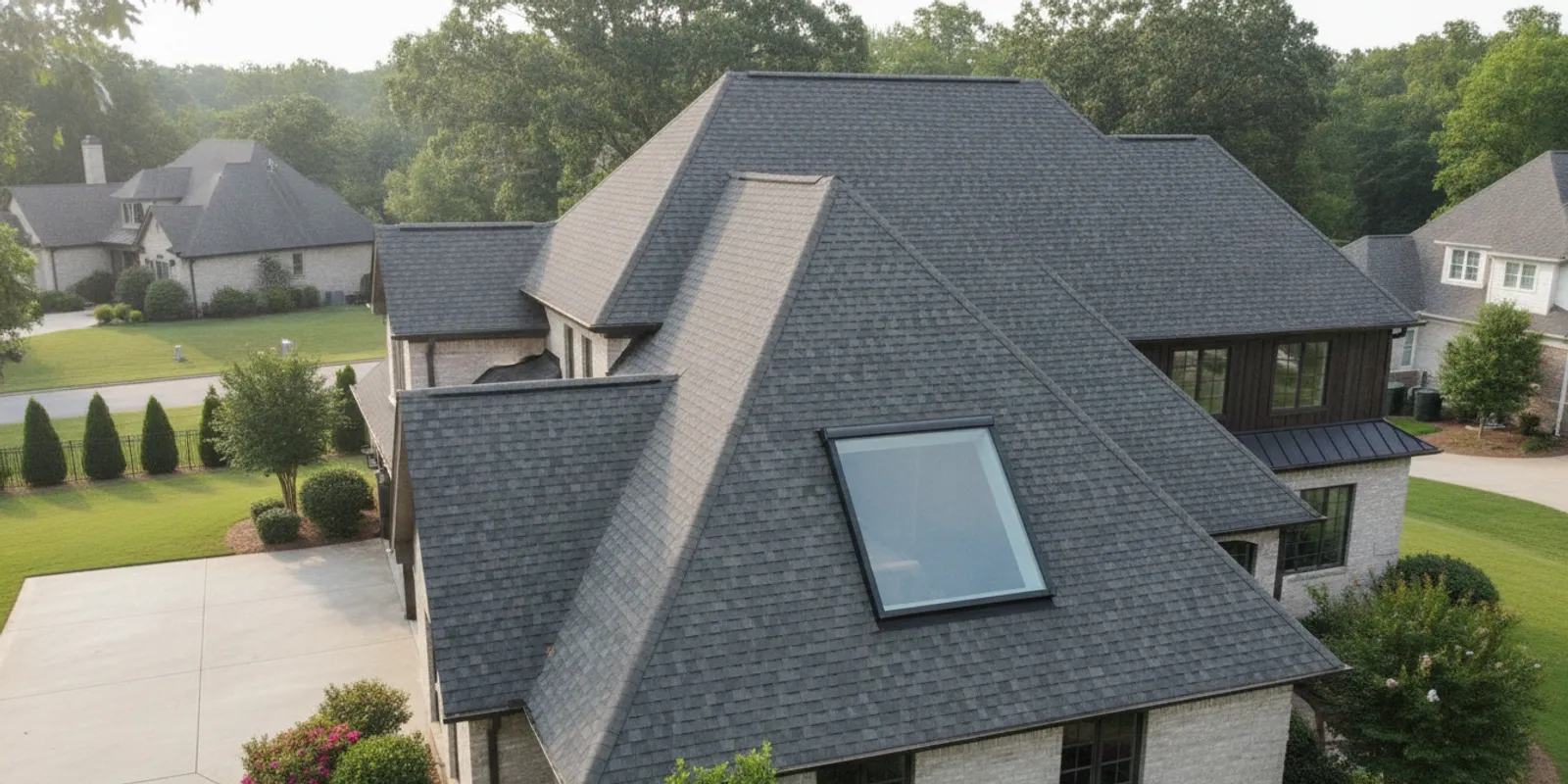
A skylight is a hole in the roof that has to stay dry. The glass is the easy part. What decides whether the project holds up is the roof around it: the slope, the framing, the flashing, and how the opening is finished inside the house.
If you are planning a skylight installation on a Charlotte-area home, start with the room you want to brighten and the roof that has to carry the opening. This guide covers the decisions that actually change the work: where the unit goes, whether it should open, what a written scope should name, and when it makes more sense to do the work with a roof replacement.
Call Today to Book Your Exclusive Roof Evaluation
Name the job first. You may want daylight in a dark hallway, a brighter kitchen, or fresh air in a bathroom that stays damp. Those are different projects. A unit chosen from a brochure, before anyone looks at the roof, often ends up in the wrong place or the wrong size.
Walk the room at different times of day. Note where the sun hits, whether trees shade the roof, and whether direct light would glare off a counter or heat the room in summer. Then look up. A spot that feels right from the floor may sit on a rafter, a bathroom vent, or a valley where water already concentrates.
These notes help the conversation. They do not replace a look at the actual roof. Nobody should quote a final scope from photos alone.
A steep asphalt roof, a standing-seam metal roof, and a low-slope roof do not take the same skylight or the same flashing. The unit has to match the covering, and the opening has to fit the framing without cutting a rafter that the roof needs.
The inside matters as much as the outside. If the ceiling sits well below the roof deck, the light travels down a shaft. A wide, light-colored shaft spreads daylight. A narrow or sharply angled one throws a smaller patch of light and can look like a tunnel. Ask to see both the roof location and the finished opening, not just a mark on the shingles.
Do not assume the opening can slide a foot to dodge a rafter. Moving it changes the shaft, the interior trim, and sometimes the roof layout. The contractor should say what has been checked from the attic or the roof, and what can only be confirmed once the ceiling or the shingles are opened.
Choose a fixed unit when you only want light. Choose a venting unit when the room needs air, such as a bathroom or a kitchen that holds heat. Venting adds a mechanism, a screen, and a way to open it, by hand, pole, or remote. If you cannot reach the unit safely, say so before you buy an operable model you will never open.
Ask for the exact product: manufacturer, model, size, and glass. "Energy efficient" is not a specification. The proposal should say which unit is going on your roof and which installation instructions apply to that roof type.
The words "install skylight" can mean the unit only, or the unit plus the shaft, drywall, trim, and paint. Get the difference in writing before you compare prices.
A useful proposal covers:
Roofing and interior finish are often different trades. If the proposal stops at the roof, ask who builds the shaft and who paints it. Super Roofing installs skylights as part of exterior work. The residential roofing page shows how that work fits the rest of the roof.
A skylight leaks when the layers around it are wrong, not because someone skipped a bead of sealant. Water has to shed off the high side, around the curb or flashing, and back onto the roof below. That depends on the slope, the underlayment, the flashing kit made for that unit, and the roof covering.
Ask the contractor to walk through that path on your roof. Also ask what happens if the shingles next to the opening are too brittle to lift, or if the old flashing on a nearby vent is already failing. Those findings change the scope. Caulk over the top of a bad detail does not.
Charlotte gets hard rain, humid summers, and freeze-thaw stretches in winter. That is a reason to get the drainage right. It is not a reason to promise that a skylight will never need attention. The proposal should name the materials, the workmanship coverage, and what the warranty does not cover.
Combining the two jobs makes sense when the roof covering is near the end of its life, or when the skylight sits in an area you are already tearing off. The crew can build the opening into new underlayment and new shingles instead of cutting into a finished roof.
It does not make sense just because both jobs are "roof work." If the roof is sound, a separate installation is often the right scope, once the location and flashing plan are confirmed. If you are replacing the roof anyway, ask whether the new unit can use the existing opening or whether the framing and the interior shaft have to change. A larger unit is not a same-day swap.
The roof replacement page covers how a full replacement is planned. Use it for context, then get a scope that says whether the skylight is included.
Two bids can name the same skylight and still describe different jobs. Read for the work, not the brand.
Put exclusions in the proposal, not in a phone call. If hidden damage could add work, the bid should say how you will be told and how you approve the extra cost.
A contractor who has thought about your roof can answer these without a brochure.
Super Roofing is a CertainTeed ShingleMaster PREMIER Contractor. Workmanship coverage on an installed roofing system is 15 years, 30 years, or lifetime, depending on the system in the written proposal. CertainTeed's own workmanship coverage is a separate document. A January 2026 5-STAR PREMIER specimen describes it for an eligible original owner of a single-family detached home for as long as that owner owns the home, and for 30 years from installation if the warranty transfers. That specimen is not a promise that this roof qualifies. The warranty page explains the two layers. Confirm which terms apply to your project before you sign.
Keep the proposal, the product sheet, the warranty, and photos of the finished opening in one place. Follow the manufacturer's care notes, and look at the skylight from the ground when you look at the rest of the roof.
A water stain or fogging on the glass does not, by itself, mean the installation failed. Condensation, a bath fan that does not vent outside, or a leak somewhere else on the roof can look the same from the room. Write down when you noticed it and what the weather was doing. Do not climb up and pull at the flashing. Have the roof and the interior checked together before anyone starts a repair.
Tell the contractor which room you want to change and what you want from it, light or air or both. Ask for a visit and a written scope that ties the skylight to the roof and to the finished opening inside. That is enough to decide whether you need a new unit, a replacement of an old one, or the work bundled with a new roof.
Contact Super Roofing to discuss your roof and skylight plans
The project goes well when the location is right, the flashing is built into the roof, and every part of the opening has a name on the proposal.
