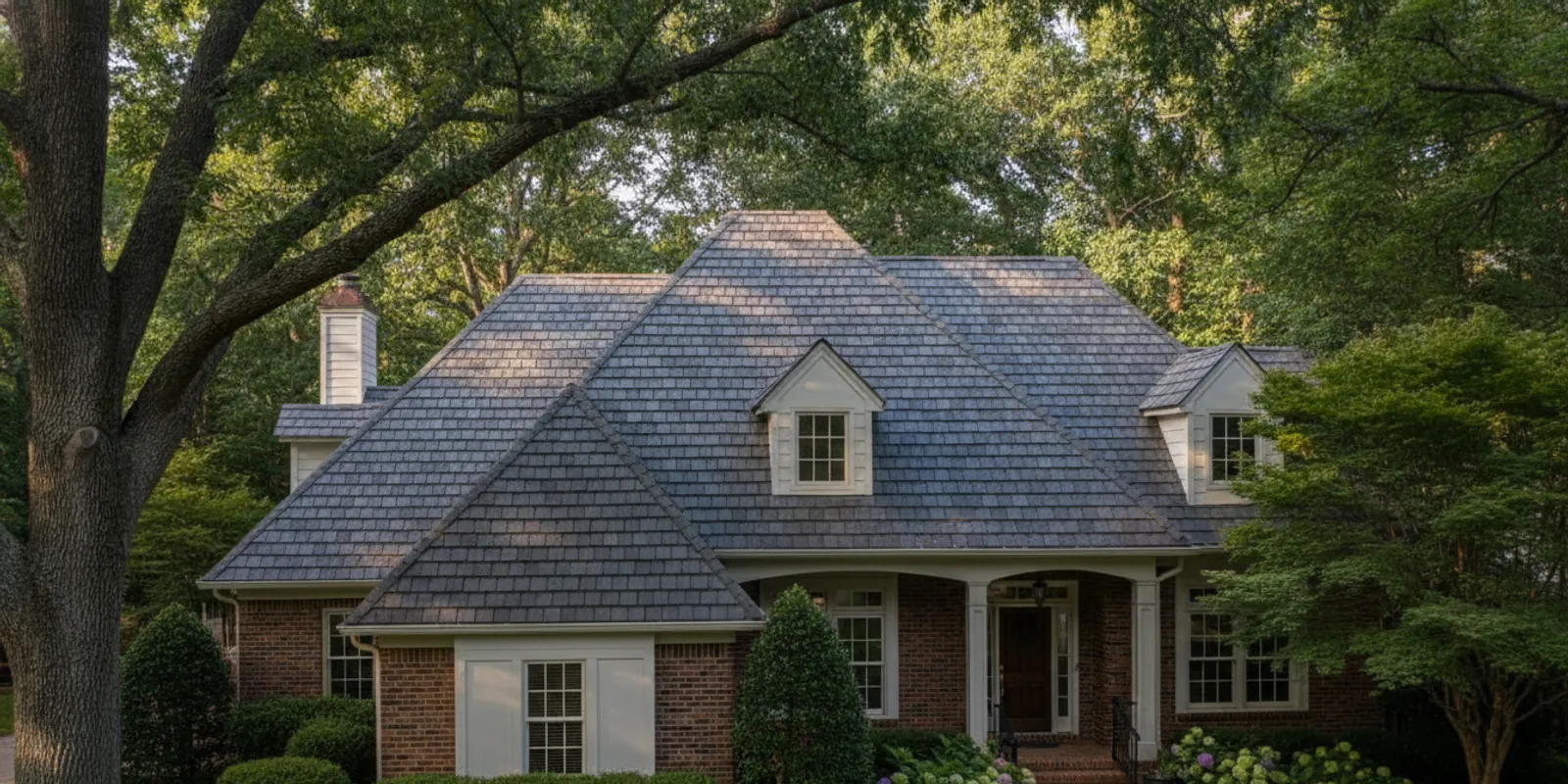
A roof replacement timeline is not one date on a calendar. It is a sequence: document the roof’s condition, choose a system and written scope, coordinate materials and access, complete the tear-off and installation, then review the finished work and warranty paperwork. For a Charlotte-area homeowner, knowing what each stage involves makes it easier to plan around weather, household routines, and the decisions that can affect the schedule.
Contact us to discuss your roof replacement
People often ask how many days a roof replacement takes, but that question can refer to two very different periods. One is the time from the first conversation to the start of work. The other is the time crews are actively removing the old roof and installing the new one. The first period includes evaluation, decisions, a written proposal, agreement, material coordination, and scheduling. The second is the on-site installation window. Completion may also be followed by cleanup checks, documentation, and any remaining closeout items.
These parts should not be combined into one universal number. A straightforward home with an agreed scope and ready materials has different scheduling needs from a property where the roof has several sections, concealed damage is found, or the owner is still choosing among materials. A contractor may be able to estimate an on-site duration after reviewing the home, but the calendar date also depends on the job queue, weather, access, and delivery coordination.
For planning, ask the contractor to distinguish an estimated start date, the expected active work period, and any follow-up or closeout steps. Ask whether those are firm commitments or working estimates. A careful answer explains what is known, what remains conditional, and how a change will be communicated.
Replacement is a sequence of decisions, not simply a material delivery followed by a crew arriving. A useful plan makes the transitions visible so that you know what must be decided before the next stage can proceed.
Each step can take a different amount of time. The contractor’s written estimate for the work is not the same thing as a confirmed installation date. If one decision is unresolved, ask whether it affects material ordering, project scope, or scheduling, and what information would let the next step move forward.
Active installation time depends on the specific roof and the agreed work. A typical residential shingle replacement may be completed in about one day, according to the company’s described operating process, but that is not a guarantee for every home. Roof size, number of roof sections, pitch and access, detail work, selected system, weather, and conditions beneath the existing materials can change the work period.
A simple estimate based on the visible roof can change once old materials are removed. For example, the decking may need attention, or the crew may discover details that were not visible during the initial evaluation. A responsible schedule allows for the possibility of a scope question rather than assuming every roof will expose identical conditions. Ask how the contractor will pause, document the finding, explain options, and obtain your direction before work outside the agreed scope proceeds.
Ask what “one day” means in the proposal or scheduling conversation. Does it refer to the expected active installation, or to the entire visit, including delivery and cleanup? Is work expected to be continuous, or could the crew need another day for a specific portion? Clarifying these terms helps you make realistic plans for parking, pets, work calls, and access.
If your project includes a more complex roof design or multiple materials, it may not resemble the schedule for a standard shingle replacement. Metal roofing, slate-style products, steep or difficult-to-access areas, and a combination of roof sections can require different sequencing. The contractor should explain the expected duration based on your property and scope instead of relying only on a generic average.
The following factors can affect the time before installation, the on-site work, or both. Some are resolved early; others cannot be confirmed until the roof is opened or weather conditions are known.
When a schedule changes, the most useful update identifies what changed, whether the home is protected, what action is needed from you, and the next expected update or work window. You can ask the contractor to provide that information in writing so that the plan is easy to refer back to.
A clear scope helps both sides understand what the schedule is meant to cover. Before approving a project, compare the written description with your understanding of the conversation. The scope should identify the roof areas and work included, the proposed roofing system and named materials, and how the contractor will address relevant components such as underlayment, flashing, and roof-edge details when applicable.
Ask how tear-off and disposal are handled, what property-protection measures are planned, and what cleanup is included. Clarify whether ventilation, skylight, gutter, or other work is part of this project or a separate item. If the proposal excludes a component you expected to be included, have the contractor explain the boundary before the work is scheduled.
Also look for the process for concealed conditions and changes. A written change should make clear what was found, what additional work is proposed, how it affects the project, and whether it changes the schedule or cost. Do not rely on a passing verbal explanation when a material change to the work is being discussed. Ask for the details and give yourself time to review them.
For replacement options and residential service information, see Super Roofing’s residential roofing page. A service page can help you understand the broad work category, but the proposal for your property is what should describe the actual project. Ensure the scope is specific to your roof and that any questions are resolved before you treat the schedule as settled.
The roofing system is a combination of products and workmanship, not just the visible surface. Selecting a product can shape material ordering and installation details, so it is better to make the decision before the project date than during an avoidable last-minute exchange.
For asphalt shingles, ask which product line and color the written proposal specifies, and what underlayment, ventilation, flashing, and other components are included. Super Roofing describes replacement options that include Landmark, Landmark PRO, and premium shingle systems. The company’s stated workmanship warranty choices are 15 years, 30 years, or lifetime, depending on the system and written terms. The exact package and eligibility should be stated in the proposal rather than assumed from the shingle name alone.
Roofing products can carry separate manufacturer and contractor workmanship terms. Those are distinct layers. CertainTeed SureStart PLUS coverage depends on the eligible system and registration terms; the company describes manufacturer coverage of up to 50 years for qualifying single-family applications, with workmanship coverage from CertainTeed topping out at 30 years. Super Roofing’s lifetime workmanship option is its own workmanship warranty, not a lifetime CertainTeed registration. Confirm the exact documents, term, property eligibility, exclusions, and registration responsibilities for your project.
If your home is a townhome, condominium, or part of a multifamily or HOA property, ask specifically which warranty terms apply to that building type. The customer’s stated guidance caps CertainTeed manufacturer workmanship coverage at 30 years for those property types. Do not assume a single-family warranty description applies to a shared or attached property.
Other available choices may include luxury shingles, synthetic slate or shake, or standing-seam metal. These options can have different appearance, product details, and installation sequences. Ask how a proposed option changes the material list, any supporting components, and expected on-site work. A material comparison is most useful when it includes the full system, not only a sample or product label.
Warranty paperwork is a closeout item worth planning for at the beginning. Ask which party completes any required registration, what records you will receive, and when. Keep the final proposal, approved changes, product information, completion records, and warranty documents together. The roofing warranty information can give useful background, but confirm the terms that apply to the exact system installed on your home.
Once the schedule is approaching, ask the contractor for a preparation checklist specific to the home. General preparation can reduce interruptions, but the crew’s instructions should take precedence because roof layout, access, and project scope differ.
Do not climb onto the roof or attempt to inspect active work from an unsafe position. If you want to understand progress, ask the contractor how updates or photographs will be shared. Stay clear of ladders, tools, dropped-material zones, and any area the crew has marked as restricted.
Although the exact sequence depends on the agreed scope, a residential shingle replacement generally moves through several coordinated tasks. The work area is prepared, the existing roof covering is removed as specified, and the exposed surface is reviewed. The team then addresses the approved scope, installs the selected roofing components in sequence, and completes detail work and cleanup.
Preparation and property protection matter. Ask how the crew plans to protect landscaping and nearby surfaces and where debris will be collected. The contractor should explain what you can expect around the house and how you can communicate during the work. A tidy site and a clear update process are part of the overall project experience, not simply extras to consider after installation.
Once the old materials are removed, the roof deck and underlying conditions may be more visible. If a condition differs from the written assumptions, the crew may need to document it and get direction on an approved change. Ask before work begins how the project contact will share photographs or other information and whether you will be asked to approve a revised scope. This is one reason a schedule should include room for decisions when concealed conditions arise.
After the surface is ready, installation proceeds according to the selected system and manufacturer instructions. Flashing and transitions deserve particular attention because roof performance depends on details as well as the field shingles or panels. Ask the contractor what components are included and how the completed work will be checked. Avoid making a technical diagnosis from a street-level view; request an explanation from the project contact if something looks different from what you expected.
At the end of the active work, the team should address debris and the agreed cleanup. Ask what cleanup includes, whether a final review will take place, and how any remaining item will be tracked. A project is easier to close out when the owner knows who will confirm completion and provide the final documents.
A roof replacement is an exterior project, so weather can affect both the start and progress of work. A forecast may lead a contractor to move a planned date before the crew arrives. During a project, conditions may also require the crew to stop or adjust the sequence. A cautious pause can be part of protecting workers, the home, and the installation process.
Before the start date, ask what communication you should expect if weather changes the plan. Find out when a decision will be made, how you will hear about it, and whether the contractor will give a revised date or a new scheduling window. It is reasonable to ask for an update rather than assuming that a tentative date is still on track.
If weather interrupts work after tear-off begins, ask how the open area will be protected and what must happen before work resumes. The project contact can explain the protection steps for that specific roof. Do not go onto the roof to assess a temporary covering or try to make a repair yourself.
Build flexibility into your household plans. Avoid arranging a critical delivery, event, or restricted access window based only on an early estimate. If you need to coordinate a vehicle, caregiver, tenant, or shared driveway, tell the contractor before the work date and confirm the plan again as the project approaches.
A few specific questions can turn a general promise into a useful working plan. You do not need to know roofing terminology to ask for a clear explanation.
Listen for answers that distinguish an estimate from a commitment. If a contractor cannot yet name a date, ask what must happen before one can be confirmed. If an answer depends on a product selection or another decision, get that dependency in writing. You can compare proposals more accurately when each contractor has described the same scope, schedule assumptions, and change process.
Two proposals may use different language for the same work. One may state a short on-site duration without describing material delivery or closeout. Another may provide a wider window that accounts for coordination and possible changes. Rather than selecting a contractor based only on the smallest number of days, compare what the estimate actually covers.
Check whether each proposal describes the same roof areas and system. Confirm whether tear-off, disposal, flashing, ventilation items, cleanup, and other components you expect are included or separately scoped. Then compare the stated schedule: Is it a start date, a work duration, or a complete project window? Does it say what happens if the weather changes or hidden conditions require a decision?
Communication expectations are also part of a reliable schedule. A contractor who explains how updates work gives you a way to manage the project if a date moves. Ask who your contact is and how to reach that person. Make sure the plan covers a decision needed during installation, not only routine messages before the crew arrives.
Use comparable questions with each contractor, and write down the answers. If an answer is vague, request clarification before signing. This process is not about demanding that every project follow the same timetable. It is about understanding the assumptions behind the schedule and choosing a plan that fits your home and priorities.
A planning calendar can help you see dependencies without suggesting that every roof follows the same number of days. Begin with the evaluation, then note when you expect to receive and review the written scope. Add decision points for the material, color, system details, and any questions about exclusions. After those items are settled, note the contractor’s current scheduling window and the event that will make the date firm, such as confirmation that the project is ready to be scheduled.
Next, list the practical tasks that depend on the installation date. These may include clearing a parking area, arranging access, moving outdoor belongings, telling household members about the work, and keeping a phone available for questions. Put these items close to the confirmed date rather than completing them all at the beginning of the planning process. If a date moves because of weather or coordination, a short checklist is easier to update than a series of assumptions.
For a simple example, imagine an owner who has selected a system and approved a written scope, but has not yet received a confirmed work date. That owner can complete product questions and discuss site access now, but should avoid telling neighbors that installation will occur on a particular day until the contractor confirms it. Once the date is confirmed, the owner can move vehicles and notify other household members according to the contractor’s guidance. If a weather update shifts the date, the same preparation list can be revised.
A second example is a home where the owner still needs to choose between proposed systems. Here, the decision itself may affect the product information and material coordination. The useful next step is to ask which choices remain open, what information helps compare them, and when the choice is needed for scheduling. Do not treat a preliminary project window as if it were independent of an outstanding decision.
A third example is a house with a shared driveway or a narrow staging area. The owner can send photographs or explain access limits during planning, then confirm the arrangement before the crew arrives. This can help identify a coordination question early, when there is time to discuss it. The specific staging plan belongs to the contractor and the property conditions; the owner’s role is to raise constraints and follow the agreed directions.
These examples are not duration promises. They show why it helps to track decision dependencies separately from calendar estimates. A useful planning note can have four columns: item, person responsible, what must be confirmed, and current status. Keep it simple. The goal is to know whether the project is waiting on a selection, a written approval, a delivery update, or the contractor’s confirmation, rather than interpreting every gap as a delay.
Some roofing decisions involve a spouse, co-owner, property manager, association, or another person who needs to review the scope. Identify that early. Ask the contractor which decisions need approval before work is scheduled and how to keep the approved version of the scope clear. If several people will receive updates, agree on a primary contact who can relay questions and provide direction.
For an association or shared property, find out whether there are design standards, application steps, or scheduling rules that apply. The property owner or manager should ask the appropriate association or authority about current requirements; a roofer cannot assume that the same process applies to every community. Build time for any relevant review into the planning discussion, and make clear who will submit information and communicate the decision. Do not presume that an informal conversation replaces a required written approval.
For a home with tenants, caregivers, or people who rely on a particular entrance or parking space, explain those needs before installation day. The contractor can tell you what access or staging arrangements may be possible for the project. Share the confirmed work window with affected people and let them know that weather or newly discovered conditions can change the plan. Avoid promising a precise finish time unless the contractor has confirmed one.
When multiple decision-makers review a proposal, keep the written scope and any later changes together. If one person asks a question, make sure the answer reaches everyone who is expected to approve the work. This avoids conflicting assumptions about materials, schedule, or what a change includes. A short written recap after a decision can be useful: state the selected option, the unresolved questions, and the next step without treating an informal preference as final authorization.
Owners who are handling a project connected to an insurance claim should keep the replacement schedule separate from a coverage decision. A contractor can discuss observed roof conditions and the work being proposed, but an insurer determines coverage under the policy. Do not assume that claim communication alone sets a construction date or guarantees approval. Ask the contractor what scheduling decisions are independent of the claim process and what must be resolved before work can be authorized.
Before work begins, agree on a practical way to receive updates. You may want to know who will contact you, whether updates will come by phone, email, or text, and what kinds of events will prompt a message. The important point is not the channel itself; it is that you know how to get a current answer and who is responsible for providing it.
A useful update answers four questions: What changed? What does that mean for the planned work? Is there anything the owner needs to decide or prepare? When should the owner expect the next update? If an estimated date is replaced with a window, ask what would narrow that window. If the installation is paused, ask what must be completed before it resumes. Clear information helps you plan without requiring the contractor to predict conditions that are not yet known.
Keep a brief record of important communications. Save the approved proposal, material selection, confirmed date, schedule updates, and written changes in one place. If a phone conversation resolves a significant scope or date question, send a concise follow-up in writing and ask the contractor to correct any misunderstanding. This is especially useful when several people are involved or when weather requires a change after plans have been made.
Be alert to the difference between a progress update and a request for authorization. A crew may report a newly visible condition, but that report is not by itself your approval for additional work. Ask for the written description, supporting information, and any schedule implications. Read the change, clarify questions, and provide direction through the agreed process before the work proceeds beyond the approved scope.
At closeout, ask for a simple confirmation that the planned work is complete or a list of remaining items with a responsible contact and next step. Confirm when final product and warranty information will be delivered. Keeping this handoff explicit means the schedule does not end with an unanswered question about cleanup, documentation, or a follow-up visit.
For a homeowner in Charlotte, the practical approach is to plan in stages and confirm each handoff. Start with an evaluation that documents the roof’s condition and your goals. Review a property-specific scope and system choice. Clarify warranty layers, project communication, weather contingencies, and how concealed conditions will be handled. Once the date is confirmed, prepare the property using the contractor’s directions and keep a contact path open while the crew is working.
There is no single replacement calendar that fits every Charlotte home. An expected one-day residential installation may be realistic for some projects, while the full period from initial evaluation to closeout depends on decisions, scheduling, material coordination, roof details, and conditions that cannot be seen until tear-off. The right question is not only “How soon?” It is also “What has to happen first, what is included in that date, and how will we handle a change?”
For an initial conversation about residential roofing, review the proposed work and ask for a schedule tied to your home rather than relying on a generic estimate. You can also learn about a roof inspection before deciding what information you need for the next step.
If you are considering replacement, gather any prior inspection notes, photos, product information, or warranty documents you already have. Make a short list of priorities, such as appearance, system options, timing, and questions about existing roof details. That gives the contractor a useful starting point without requiring you to diagnose the roof on your own.
When you speak with a roofing representative, ask for the findings and proposed scope in writing. Confirm what is included, how the schedule will be set, and who will keep you informed if weather or a concealed condition affects the plan. A clear process lets you evaluate the work on its merits and make decisions at each stage.
Request a roof replacement conversation
Use the contractor’s latest information rather than carrying forward an old estimate. A date discussed during an initial visit may change after the scope is approved, a product is selected, or the project is ready to be scheduled. When you receive a new date, check whether it replaces an earlier estimate or simply narrows the expected window. This small clarification prevents two calendars from being treated as current at the same time.
Also separate tasks you control from tasks you do not. You can return a requested selection, identify access constraints, and prepare the home. You cannot control the weather, the condition of concealed roof layers, or the contractor’s other scheduled work. Ask what you can do to avoid preventable pauses, but do not accept an unrealistic date simply because it sounds convenient. A schedule based on known dependencies is more useful than a confident-sounding date without explanation.
If the project has a time-sensitive need, say so while the scope is being discussed. Explain the reason and ask what the contractor can confirm. Do not assume a specific completion date until it is stated clearly and in writing. If your plans depend on the roof being completed before a trip, event, or another project, discuss a contingency in advance rather than waiting until installation begins.
Finally, use the closeout conversation to confirm that the finished work matches the agreed scope and that any approved changes are reflected in the project record. Ask how to raise a follow-up question if you notice an issue after the crew has left. The timeline is not only about getting to installation day; it includes a clear handoff after the work is done.
It may be possible for a typical residential shingle project, and Super Roofing describes one-day completion as typical for residential work. It is not a promise for every roof. The contractor should estimate the active work period after reviewing your home, proposed system, access, and scope, and explain what could add time.
The time depends on the project and the information needed to prepare a useful written scope. Super Roofing describes written residential estimates as typically provided within seven business days after the inspection. Ask whether your project has any conditions that could affect that timing and what information the contractor still needs.
Not necessarily, but weather can affect whether work is safe or appropriate and whether a planned date should move. The contractor should determine how conditions affect your project, communicate any change, and explain how the home will be protected if work is interrupted.
Make the choice early enough for the written scope and material coordination to reflect it. Ask for the exact product line, color, system components, and applicable warranty terms to be identified before the project date is treated as final.
Ask the contractor to document the condition and explain the proposed response. If the finding changes the agreed work, request a written change describing the added work and any schedule or cost effect, then review it before authorizing the change.
A well-planned roof replacement timeline gives you clear steps, realistic expectations, and a way to handle changes without guessing what happens next.
