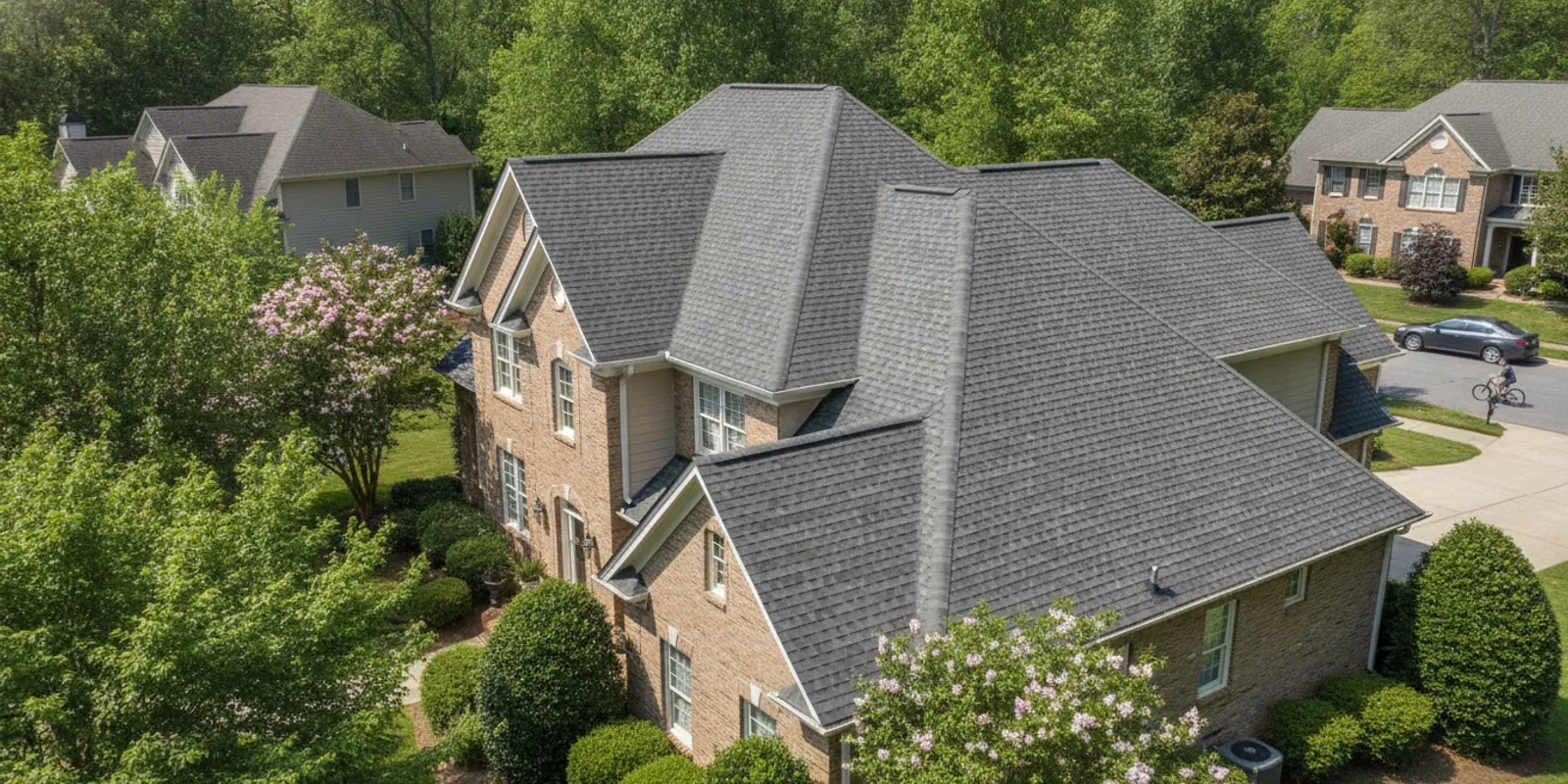
If water is coming in, deal with the people and the room first. Stay off a wet roof. If someone is hurt, a ceiling is coming down, or water is near electricity, get the appropriate immediate help. Do not climb a wet slope to see where the drip starts.
Roof repair preparation in Charlotte is the short stretch between "something is wrong" and a signed scope. Use it to keep the house safe, write down what you saw, and make sure the proposal names the actual repair. You are not trying to diagnose the roof yourself.
Call Today to Book Your Exclusive Roof Evaluation
Move children and pets away from an active drip, wet flooring, or a ceiling that looks like it is sagging. Do not climb onto a wet, steep, or damaged roof, and do not send a neighbor up either. If the ceiling is bulging, stay out from under it. A soaked patch of drywall can come down without much warning.
Electricity is the other immediate risk. If water is near a light, a ceiling fan, an outlet, or any other electrical equipment, keep people away from that water. Do not walk into it, and do not touch a switch or the fixture. Call a qualified electrician, or emergency services if someone is hurt or the situation is urgent. A bucket is only for a drip that is well away from electrical equipment, and only when you can reach it without stepping into that water.
Use your phone from the yard and from inside the room. Take one wide shot that shows where you are, then a closer shot of the stain, the missing shingle, or the gutter. Note the date, the room, and whether it is raining now or the stain showed up the next day.
Do not lean over a stairwell or climb into a collapsing attic to get a better angle. Those photos are enough for the roofer to know where to start. They are also what you will want if this turns into an insurance conversation later.
Move electronics, rugs, and small furniture only when the drip and the path to them are well away from electrical equipment and the floor is safe to walk on. Cover what you cannot move, from that same safe distance. If water is still coming in and it is not near a light, fan, outlet, or other electrical equipment, a bucket and a towel are enough indoors. If the water is near electrical equipment, leave it and get qualified help.
Do not staple plastic to the roof, smear roof cement over a wet shingle, or nail a loose shingle back down. Those patches hide the source and often make the real repair larger. If the ceiling is actively failing, the immediate step is to get people out from under it. A tarp installed by a roofer is later roof protection, not something to attempt from a ladder.
You do not need to decide repair versus replacement before the visit. You need to point at the problem.
Be there, or have someone there who can make decisions. An evaluation where nobody can say "that stain, not the other one" wastes the visit. The roof inspection page describes what that visit covers.
The stain is a symptom. The visit should look at the covering, flashings, valleys, pipe boots, and the roof edge, plus the attic when it is safe to enter. A drip in a hallway often starts at a boot or a valley several feet away.
Ask them to separate what they saw from what they recommend. A cracked pipe boot is a finding. "Replace the slope" is a recommendation, and it needs a reason: widespread granule loss, soft decking, or a roof that is already failing in more than one place.
A repair fits when one area failed and the rest of the roof is still sound. A split boot, a short run of bad flashing, a few missing shingles over solid decking: those are repairs.
Talk about replacement when the damage is spread across the roof, the deck is soft, the same spot has been repaired twice, or the shingles are brittle enough that a repair would break the surrounding field. Super Roofing identifies the failed area and writes the repair to that finding. Opening the area to the deck, instead of laying new shingles over the old ones, is part of that scope when the written proposal says so. The scope is not a promise that every leak is solved. An overlay is not a repair we sell.
If you are unsure, ask for both scopes. A defined repair and a replacement price, side by side, are easier to judge than one number with a vague description.
"Fix leak" is not a scope. Before you sign, the proposal should say:
Residential repair workmanship coverage is 1 year. That is not the 15-year, 30-year, or lifetime workmanship coverage on a full roofing system. Manufacturer coverage, such as CertainTeed SureStart PLUS on an eligible shingle system, is separate again and does not transfer to a small repair. The warranty page lays out the two layers. The paper for your job is the one that counts.
Write down the date of the storm and photograph what you can see from the ground: bruised shingles, dented gutters, damaged screens. Damage to a car or the siding is context. It does not prove the roof is covered.
A roofer can record what is on the roof and price the work. Your insurer decides coverage. No contractor can promise a claim will be approved. Keep photos, the estimate, and the insurance emails together, and follow the insurer's own reporting steps. Storm-related scope is covered on the storm damage page.
Move cars off the driveway and clear the side of the house they will work from. Ask for an arrival window and a phone number. You do not need to stand in the yard and supervise.
The crew should be able to point at the area in the proposal. If they open the roof and the damage is wider than that, they should call you before they keep going. When they finish, look from the ground: debris gone, no exposed underlayment, gutters not crushed by the ladder. Ask for photos of anything you cannot see, especially the repaired flashing.
If water is coming in right now, protect the room and book the evaluation today. If it is a stain that showed up after last week's rain, take the photos, note the room, and book it before the next storm. Either way, wait for a written scope before you approve the repair.
