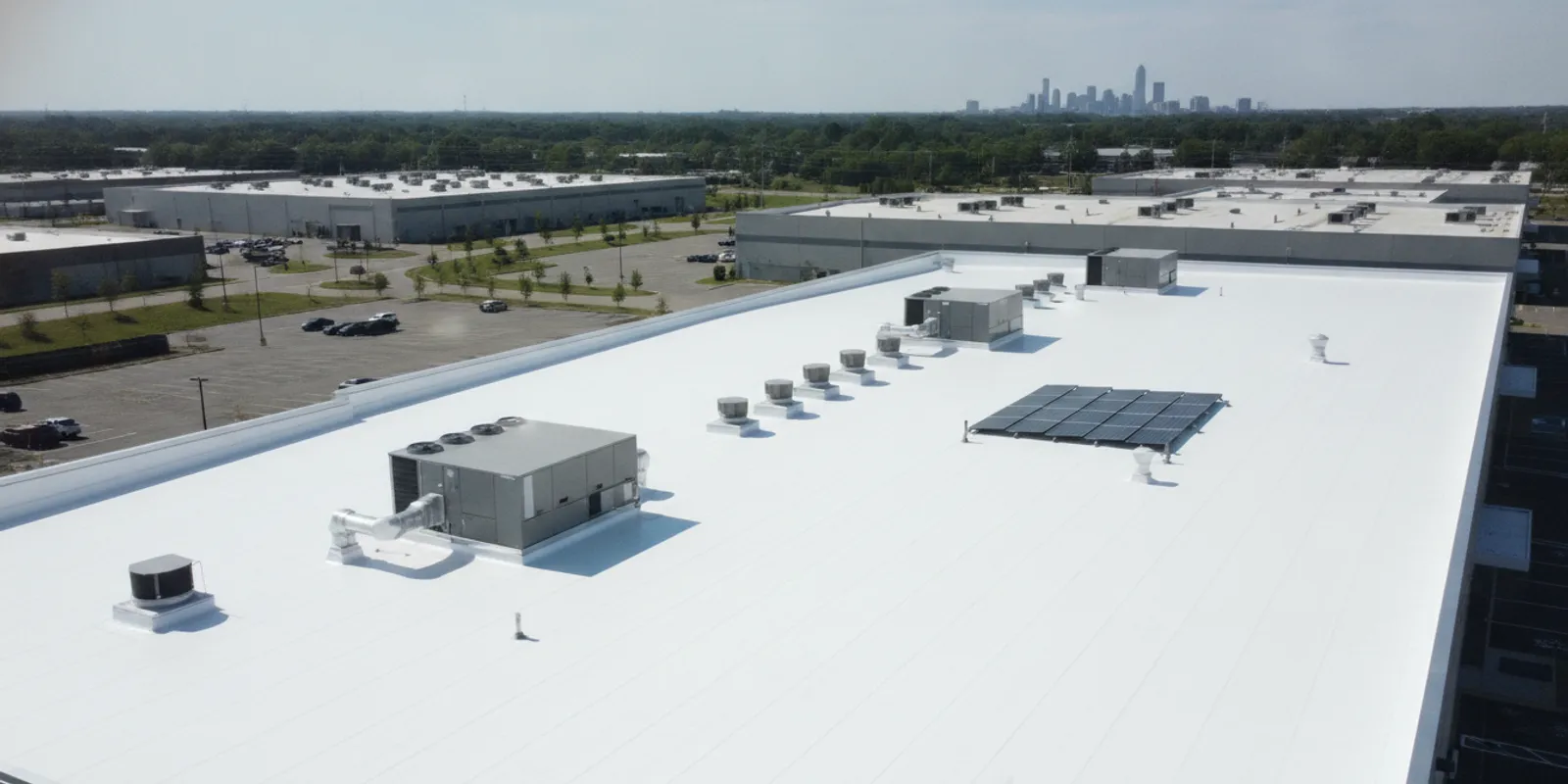
A flat roof is almost never perfectly level. Most low-slope roofs have some pitch, built into the deck or formed with tapered insulation, so water can move toward drains, scuppers, or gutters. On a Charlotte commercial building, the right system depends on that slope, the drainage path, the deck, rooftop equipment, how the building is used, and the work you want the roof to do. The membrane is one part of the assembly. Details and installation scope matter just as much.
This checklist is for owners, property managers, facility directors, churches, and boards who need a clearer conversation before they approve a project. It is not a way to pick a roof without an on-site assessment. Super Roofing Company serves the greater Charlotte area and works on commercial roofing systems. A contractor should look at the specific building before recommending a material or a scope.
Contact Us Today
A checklist for choosing flat roof materials
Work through these in order. Each step keeps a fact that later proposals have to match.
1. Name the roof you have
- List each roof section, not one label for the whole property.
- Note the current system if you know it: TPO, PVC, modified bitumen, a coating, or EPDM.
- Mark leaks, ponding, blocked outlets, and areas that stay wet after rain.
- Gather drawings, service records, prior proposals, and photographs.
- "Low-slope" is the useful term. A roof can look flat from the ground and still have pitch. Water that has nowhere to go will not be fixed by changing the membrane name. See commercial flat roofing for how Super Roofing looks at these roofs, then ask how a proposal addresses this building's geometry.
2. Have the assessment look past the surface
- Ask the contractor to check the membrane, seams, flashings, edges, wall transitions, drains, scuppers, penetrations, curbs, and rooftop equipment.
- Ask about the deck and insulation. A new surface does not make up for a supporting layer that stays in place and is already compromised.
- Share the history: past leaks, earlier roof work, known ponding, interior stains, equipment changes, and recurring maintenance.
- Say which areas are accessible, and whether tenants, operations, or security change the visit.
- If something cannot be confirmed from the surface, ask what will be opened, why, and how that finding could change the recommendation.
- Ask for photographs or notes that tie each finding to the work being proposed. An assumption is not a confirmed condition.
3. Compare the materials on this building
Common low-slope families are TPO, PVC, modified bitumen, and coatings. Super Roofing services existing EPDM roofs and does not install new EPDM. A short overview of the categories is in this guide to flat and low-slope roofing materials. Names are not systems. Ask for the manufacturer and product, the layers, how it is attached, the preparation, and what happens to the existing roof.
- TPO and PVC. Both are single-ply membranes. Seams are generally heat-welded when the specified materials and methods are used correctly. Thickness, reinforcement, attachment, substrate, and rooftop use all change the proposal. Ask which product is specified and why it fits this building, especially around exhaust, HVAC, walk paths, and service access. Ask whether walk pads are included where people cross the roof. Do not treat a verbal mention as included. More on PVC is on commercial PVC roofing.
- Modified bitumen. This is a multi-layer category, often a base layer and a cap sheet, installed by the method the product requires. Ask which layers go on, how they are attached or bonded, and how seams, edges, penetrations, drains, and transitions are treated. If an existing roof stays, ask which materials are removed, which stay, and how the contractor checks that the result is a suitable base. Familiarity is not a reason to keep it.
- Coatings. A coating goes over a prepared surface and may be part of a restoration when the existing roof is a suitable base. It is not a cover for any problem. Moisture, damaged insulation, an unstable deck, or an open leak can rule it out. The scope should name the existing roof, the repairs before application, surface preparation, seams and penetrations, and areas that will not be coated. Say whether the job is a repair, a restoration, or a replacement. Those are different scopes.
- Existing EPDM. Age, seams, flashings, penetrations, earlier repairs, moisture, insulation, and the deck decide whether it can be repaired, restored, or replaced. Super Roofing services EPDM and does not install it new. If the proposal switches to another system, ask for the new assembly, what is torn off or kept, and how the two roofs meet. A switch should follow the building, not a default upgrade.
4. Match the material to drainage, equipment, and use
- Ask where water is supposed to go, which drain or scupper serves each area, and whether outlets are clear and connected.
- Ask whether the proposal corrects ponding or only covers the membrane. Ponding can come from slope, a blocked outlet, deflection, or an earlier change to the roof.
- Ask how water is kept out of the building if the roof is opened or a drain is affected during the work.
- List rooftop equipment and the routes technicians use: HVAC, exhaust, electrical equipment, antennas, skylights, and other penetrations. Ask who disconnects, lifts, moves, or protects each unit, and ask for the responsibility and the price in writing. A proposal that is silent about that work does not settle the contract. Confirm both before you approve the scope.
- Note the building's use. A church, office, warehouse, retail space, or multifamily property has different hours, access rules, and costs when an area is disrupted. Share dates that cannot move.
- If people walk the roof often, ask about designated routes and any protection in the design. If equipment will be replaced later, ask how that work meets the new roof.
5. Separate repair, restoration, and replacement
- A repair can fit when one defined issue can be corrected and the surrounding assembly still works.
- A restoration can fit when the existing roof is a suitable base for the specified work.
- A replacement can fit when the system or concealed parts need more than a local fix.
- Ask which condition supports the recommendation, how much of the roof is affected, what stays, and what is still unknown until materials are opened.
- A repair should name the root cause. Super Roofing strips the affected area to the deck and rebuilds compromised layers rather than treating a surface patch as a lasting fix. Repair workmanship is 1 year on residential work and 2 years on commercial work, under the written scope.
6. Read proposals on the same lines
Two proposals can share a product name and still describe different work. Compare these before you compare the total:
- Existing roof: what is removed, what stays, and how wet or damaged material found during the job is handled.
- New assembly: the product and system, including insulation, cover board, and other layers.
- Attachment and seams: how the system is fastened and how seams and transitions are finished.
- Details: drains, scuppers, curbs, penetrations, edges, walls, and changes in height. Ask whether existing edge metal stays, is modified, or is replaced, and who handles plumbing beyond the roof outlet.
- Drainage: whether a known drainage problem is corrected or left as it is.
- Operations: access, staging, tenant notice, equipment work, debris, and weather protection. Ask which section is first, whether the job is phased, and who calls when weather stops the day.
- Closeout: product information, photographs, warranty papers when they apply, and maintenance steps, labeled by roof section.
- Changes: how a concealed condition is documented, priced, and approved before extra work starts.
7. Ask for the warranty in writing
- Ask which warranty, if any, applies to these materials and this installation, who provides it, when it starts, what paperwork it needs, and what it excludes.
- Keep the manufacturer's coverage separate from the contractor's workmanship warranty. They come from different parties.
- Ask for the written warranty that applies to this membrane system and this property. A shingle credential and a shingle warranty are not the warranty for a commercial membrane roof. The proposal should name both the manufacturer's coverage and the contractor's workmanship coverage.
- Ask what maintenance records the warranty requires, and how later work by other trades is supposed to be coordinated.
8. Decide with a record the next person can read
- Before the visit, share access rules, insurance requirements, safety procedures, and work hours. Name one person to collect questions and confirm decisions in writing.
- Ask for findings in a form the team can use: a written scope, a marked roof plan, labeled photographs, or a short list of alternatives. Ask which items were seen and which still need investigation.
- Save the roof sections, the assessment date, the recommendation, the alternatives, and the questions still open. If a board approves the job, keep the proposal and the written clarifications with the meeting record.
- If one scope includes a drainage correction and another does not, settle that difference before you weigh the totals.
- During the job, record what was discovered, where, what work was proposed, and who authorized it.
- Afterward, keep a roof file: address, sections, system, completion documents, warranty papers, photographs, and later notes on leaks, drain cleaning, and equipment changes. After significant weather, note what you can see from a safe place and arrange an evaluation if something changed. Do not walk the roof unless access is authorized and safe.
Start with the building, the roof areas, the recurring water concerns, and how the property is used. An assessment is the time to compare materials. It is not a commitment to one replacement. If you are already reviewing a planned replacement, commercial roof replacement frames the project questions, and commercial roofing describes how Super Roofing coordinates commercial work. Maintenance after the job should follow the installed system. The commercial maintenance plan is a starting point, not a generic calendar.
Request a roof evaluation