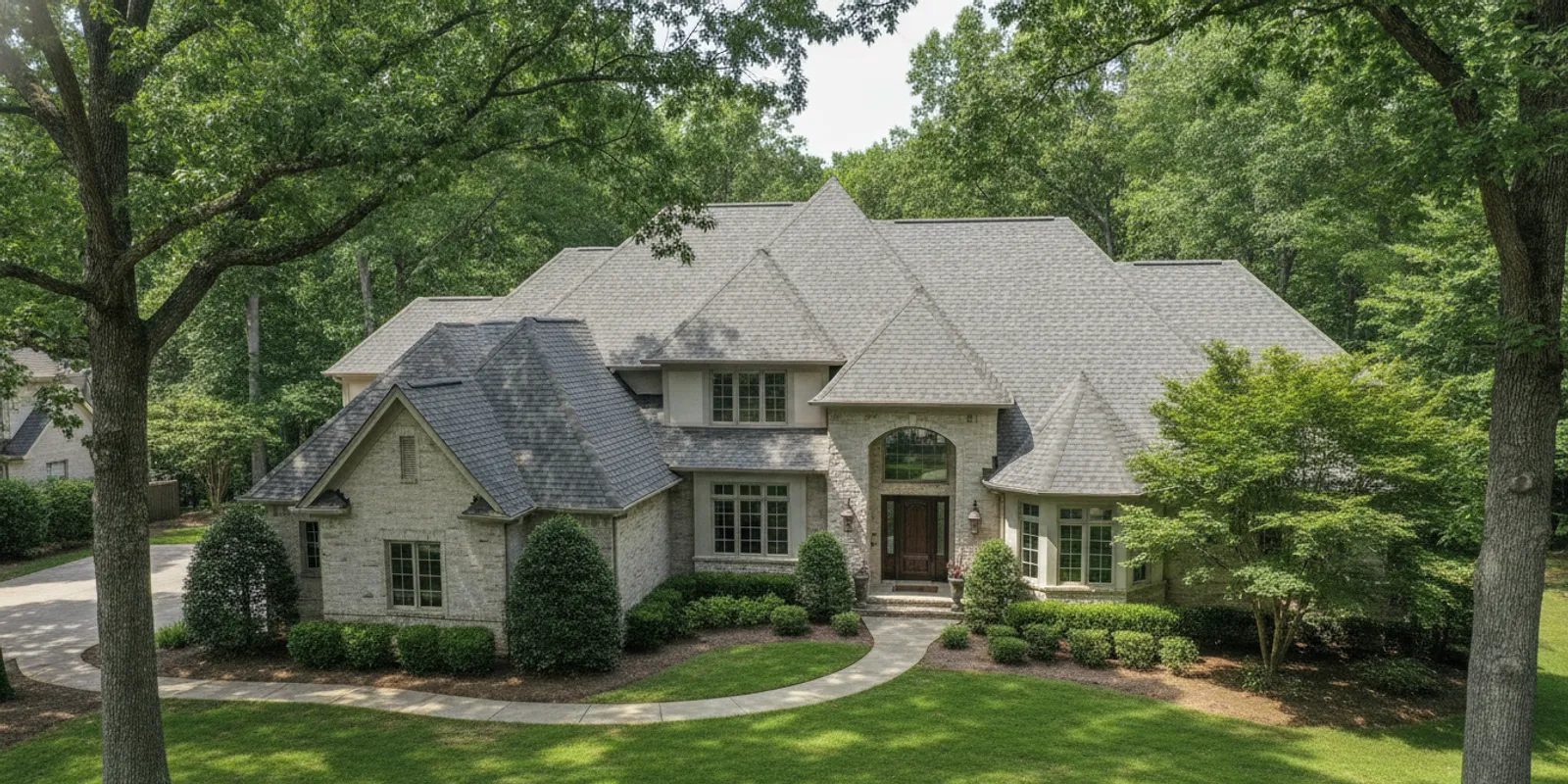
Choosing the best roofing shingles is not only a question of color or brand. For a Charlotte-area home, the better choice depends on the roof’s design, the complete materials and installation plan, your priorities for appearance and service life, and the warranty terms that actually apply. This guide walks through those decisions so you can compare systems rather than just shingle names.
There is no single shingle that is best for every property. One homeowner may value a refined slate-like appearance. Another may want a familiar architectural shingle with a clearly explained workmanship warranty. A steep roof with many valleys and dormers also presents different design and installation questions from a simple roof plane. The useful comparison is between complete roofing systems that fit the building and the owner’s priorities.
Start by defining what you need the roof to do. Think about the current roof’s condition, the architectural style of the home, how long you expect to own it, and how much variation in color and texture suits the exterior. Add practical questions: Which roof slopes are visible from the street? Are there complex transitions, skylights, or ventilation details? Does the proposal explain removal, deck review, flashing, ventilation, cleanup, and warranty terms?
A shingle label alone cannot answer those questions. The same product family can be part of different specified systems, and product eligibility may depend on the chosen components, installation, home type, registration, and warranty documentation. Ask the contractor to identify the exact shingle, accessory components, installation scope, and warranty layer in writing. That gives you a fair basis for comparison without reducing the decision to one product name.
Asphalt shingles are not all built or presented in the same way. Common categories include traditional three-tab shingles, architectural or laminated shingles, and heavier luxury shingles. The categories help frame a conversation, but they are not a substitute for confirming a product’s current specifications and eligibility.
Three-tab shingles have a flatter, more uniform appearance. Their repeated cutouts create the familiar rectangular pattern many people recognize on older roofs. If you are comparing a replacement system, ask whether this simpler profile suits the house and whether the proposed product is actually available and appropriate for the project. Do not assume that the lowest-profile option is the best fit just because it is familiar.
Three-tab products may be considered for projects where appearance, roof design, and product availability align. Yet the owner should compare the whole proposal: materials, details at edges and penetrations, removal and deck assessment, installation requirements, and applicable coverage. Ask for product documentation rather than relying on a broad description such as “standard shingles.”
Architectural shingles use a layered construction and typically create more visible variation in depth and pattern than a flat, uniform profile. They are a common option when an owner wants a dimensional asphalt roof without selecting a premium luxury appearance. The exact look differs among product lines and colors, so review actual samples or manufacturer imagery in daylight and against the home’s exterior materials.
Super Roofing describes CertainTeed Landmark and Landmark PRO options in its shingle replacement tiers. Its stated package details distinguish Landmark as a 4-Star system with a 15-year company workmanship warranty, and Landmark PRO as a 5-Star system with a 30-year company workmanship warranty. Confirm the exact components and current written terms for the property before making a decision. A product name, by itself, does not establish a particular warranty.
Luxury shingles are designed to create a more pronounced profile or to evoke the appearance of materials such as slate or wood shake. They can be worth considering when the roof is a prominent part of a home’s architecture and the owner wants a richer texture. Their visual character can also make color, shadow lines, and roof geometry especially important to review together.
Super Roofing identifies Belmont and Landmark Premium among its higher-tier shingle options and describes a 5-Star system with a lifetime company workmanship warranty for the applicable package. The word “lifetime” here refers to the company workmanship warranty described by Super Roofing, not unlimited manufacturer coverage. Ask for the written documents and confirm the system’s scope, eligibility, exclusions, registration requirements, and who provides each part of the coverage.
For a closer look at profiles and design considerations, compare the company’s luxury shingle roofing options with the specific product that appears in your estimate. The decision should follow the home’s needs and the written system details, not a category name alone.
It helps to compare a small number of options against the same questions rather than browse every color and product line at once. Begin with the roof’s needs, then consider style and warranty. If a shingle is appealing but the system details are unclear, put it on hold until you have the full product and installation information. This keeps a visual preference from becoming a substitute for a complete scope.
First, decide which profile suits the architecture. A flatter pattern may complement a simple exterior, while a dimensional or luxury profile may be a better visual match for a home with prominent rooflines. These are design considerations, not rules. Look at the house from the street and from the areas where the roof is most visible. Compare the shingle’s pattern with trim, masonry, siding, and surrounding landscape, and ask how the chosen color appears across a large roof plane rather than on a small hand sample.
Second, narrow products by system compatibility. Ask which underlayment, starter, ridge, flashing, and ventilation details are specified for the project. Determine whether the proposed product line can be used with the components and warranty tier being discussed. A product may look right but still require a different package or installation detail to match the written terms. The contractor should resolve that question before the proposal is finalized.
Third, compare the warranty layers and obligations. Write down the manufacturer product coverage, manufacturer workmanship term, and contractor workmanship warranty separately. Next to each one, record who provides it and what steps are required from the owner. Note any limits tied to a single-family structure, multifamily ownership, registration, transfer, maintenance, or installation. This simple record can reveal when two options that sound similar actually differ.
Fourth, consider how long-term ownership affects your priorities. If you expect to remain in the home for many years, system documentation and a clear explanation of future maintenance may matter greatly. If you may sell sooner, ask what warranty documents can be transferred and what conditions apply; do not assume transferability. In either case, a longer stated term does not automatically mean that every issue is covered or that every system qualifies.
Finally, make a short list of questions for each proposal. Ask the same questions of each contractor and keep the answers with the estimate. A consistent comparison avoids being distracted by different sales language and helps expose gaps in scope. You do not need to become a roofing specialist; you need enough specific information to understand what is being proposed and what remains uncertain.
Charlotte-area roofs experience seasonal rain, heat, humidity, and occasional severe weather. Those conditions make it important to ask about the complete roof assembly and installation, not just the visible shingle surface. The roof’s slope, drainage paths, valleys, eaves, ridges, penetrations, and connection to walls all influence how the system is designed and installed. Product selection should be considered alongside those site-specific details.
Do not treat a shingle’s appearance or marketing description as a guarantee against a particular weather event. Ask the contractor to explain which manufacturer requirements apply to the system, how the specified products will be installed, and what the written coverage does and does not address. Weather-related damage, manufacturing defects, workmanship, and maintenance are different issues. A warranty should not be interpreted as a promise that a roof will never need attention.
Roof shape matters, too. A roof with several intersecting slopes, valleys, dormers, chimneys, and skylights has more transitions to detail than a simple roof. The proposal should make clear how those locations will be addressed. If there are areas of concern on an existing roof, ask how the inspection will distinguish a shingle issue from a flashing, drainage, ventilation, or underlying deck concern. Selecting a premium-looking shingle cannot correct a separate roof-system problem.
Owners of townhomes, condominiums, HOA properties, and multifamily buildings should be particularly careful about warranty eligibility. Coverage terms can differ by building type and system. Super Roofing’s stated guidance caps CertainTeed workmanship coverage at 30 years for townhomes, condos, HOA, and multifamily projects; lifetime manufacturer workmanship coverage should not be assumed. Ask for the terms that specifically apply to the property and ownership arrangement.
Compare proposals line by line. The purpose is not to select the longest document or the most impressive product label. It is to understand what each contractor intends to install and how the roof will be handled. A clear scope lets you identify omissions and ask useful follow-up questions before work begins.
When estimates differ, look for a difference in scope before drawing conclusions from the total. One proposal may include a specified accessory or detail that another leaves unclear. One may describe a deck review and a process for communicating additional work, while another may not say what happens if concealed conditions are found. Ask each contractor to clarify the same points so the comparison is balanced.
A careful proposal should also identify what is not included or what depends on a later finding. This is especially useful when a roof has multiple layers, complex flashing, or areas that cannot be assessed fully until the existing covering is removed. Clarifying those boundaries in advance can prevent confusion during the project.
“Roof warranty” can refer to more than one promise. A manufacturer warranty and a contractor workmanship warranty are distinct. The manufacturer’s terms address specified product coverage, subject to the document’s conditions. A workmanship warranty is the installer’s commitment regarding workmanship as stated in its own written terms. Neither should be summarized by a single number without explaining what the number means.
Super Roofing describes CertainTeed SureStart PLUS options in 3-, 4-, and 5-Star tiers. Its stated system guidance says CertainTeed manufacturing-defect coverage can extend up to 50 years of non-prorated coverage on single-family homes, subject to applicable terms. The customer’s stated 4-Star package includes 15 years of manufacturer workmanship coverage, and 5-Star includes 30 years; only a PREMIER contractor can offer the 5-Star tier. These descriptions are not a guarantee that every home, product selection, or installation automatically qualifies. The written manufacturer document controls.
Separately, Super Roofing states its own workmanship warranty options of 15 years, 30 years, or lifetime on eligible replacement systems. The company’s lifetime workmanship warranty is the company’s warranty; it is not a CertainTeed registration or lifetime manufacturer workmanship coverage. CertainTeed workmanship coverage tops out at 30 years under the stated guidance. Ask the contractor to label both layers clearly in the proposal and to provide applicable documents for the chosen system.
Before accepting a warranty summary, ask these practical questions: What products must be used together? Who registers the system? Is registration automatic or does the owner need to complete a step? Which building types qualify? What maintenance, transfer, or notification terms apply? What kinds of damage are outside the stated coverage? Where should a future claim be sent? Written answers are more useful than a verbal promise that a roof is “fully covered.”
Review the applicable terms with the scope before choosing an option. The company’s warranty information can provide a starting point, but property-specific written terms should resolve questions about eligibility and coverage. If two proposals use different warranty tiers, compare the actual documentation and system components, rather than assuming that two warranties with similar durations offer the same protection.
Color is a visible and lasting part of the decision, but it is only one factor. Look at samples in more than one lighting condition. Outdoor daylight, shade from trees, and the colors of nearby walls or trim can change how a shingle appears. A small sample may also look different from a full roof plane, where the repeated pattern and shadow lines become more apparent.
Consider the home’s exterior as a whole. Compare the shingle to siding or masonry, trim, gutters, and visible metal elements. A color that looks striking alone may compete with a detailed facade; a quieter tone may let the architecture remain the focus. If the home is part of an HOA or another association, check its approval process and material rules before placing an order. Do not assume a product or color is approved simply because it is available.
Ask how the selected shingle’s texture will read on the actual roof shape. A complex roof can create more areas of light and shadow than a simple roof. A deeper profile may emphasize the roofline and dormers; a more uniform pattern may make the roof feel visually quieter. If appearance is a major priority, request a conversation about how the selected profile, color, and existing exterior features work together.
Color should not be used as a proxy for roof performance. Ask the manufacturer or contractor for product-specific information if you have a question about heat, reflectance, or other performance characteristics. Avoid making assumptions based on a color name or a general claim about light versus dark shingles. A product’s stated characteristics and the design of the complete roof are the appropriate sources for that discussion.
Asphalt shingles are a familiar, versatile option, but they are not the only roofing material a property owner may consider. The right comparison depends on the building, desired appearance, structural and design considerations, project scope, and the written terms offered for the selected system. If you are choosing among materials, ask the contractor to explain the trade-offs without assuming that one material is automatically superior.
For example, standing-seam metal can create a distinct architectural appearance and is a separate system from asphalt shingles. Synthetic slate or shake can offer a different visual direction from a laminated shingle. Each material has its own product specifications, details, installation requirements, and warranty terms. A material that looks attractive in a photograph may not be the right match for every roof shape or owner priority.
Compare only options that are genuinely suitable for the home. Ask whether the existing roof geometry and structure can accommodate the alternative, what components and detailing it requires, how the appearance will work with the architecture, and what maintenance or warranty responsibilities apply. Do not compare an asphalt proposal with a metal or synthetic product based only on color or a shorthand estimate. The assemblies, scope, and long-term obligations differ.
Owners who are drawn to metal can review the company’s metal roofing information as a separate material path. That is not a recommendation to switch materials; it is a way to explore a relevant alternative before deciding whether an asphalt shingle system best fits the project.
A shingle choice is one part of owning a roof; observation and timely attention matter after the project, too. Ask the contractor what basic care is appropriate for the selected system and what actions could affect written coverage. Keep any manufacturer maintenance directions with your project documents. Do not assume that every roof needs the same inspection interval or that one general checklist covers every material and building.
From the ground, pay attention to visible changes such as displaced or missing shingles, debris buildup, damaged flashing, or water marks inside the home. If you notice a concern, record when it appeared and where it is visible. Do not walk on a roof to inspect it yourself. Roof access can be hazardous, and an untrained person may damage materials or overlook a separate cause of the symptom.
Clear drainage is another sensible topic to raise during a roof discussion. Leaves and other debris can collect in gutters or at roof transitions, particularly where trees overhang the home. Ask how drainage features should be maintained for your property and whether any maintenance item is included in the project scope. A contractor can explain what applies to the roof in question; a general article cannot diagnose a blocked drain, hidden leak, or flashing problem.
Keep a record of work and observations. Save dated photographs taken safely from the ground, the contractor’s inspection notes, repair records, and product or warranty documents. If a question later arises, those records can help explain the sequence of events and make it easier to describe the concern. Records do not determine warranty eligibility, but they can support a clearer conversation with the contractor or manufacturer.
When maintenance finds a concern, ask for the apparent cause and proposed remedy in writing. A recommendation should explain whether the issue is related to a shingle, flashing, drainage, ventilation, or another part of the roof assembly. Ask what work is included and what workmanship terms apply. If you have a manufacturer coverage question, consult the applicable warranty document and follow the stated claim process rather than relying on a general summary.
A replacement should begin with understanding the existing roof and the owner’s goals. Ask whether the inspection includes relevant roof surfaces, visible edges and transitions, and attic or interior indicators when appropriate. The contractor should explain what was observed, which concerns are confirmed, and which conditions need further evaluation. Photographs and a clear explanation can help you connect the proposed work to the roof’s actual condition.
Then review the scope before the work date. Confirm the chosen product and color, system components, removal plan, expected protection and cleanup, communication approach, and how unexpected conditions would be handled. If a contractor uses a named package, ask what is included in that package and what could change based on findings after removal. You should understand what you are authorizing.
During installation, a roof is a working construction site. Ask who is the contact for project questions, how changes will be documented, and how concerns will be raised promptly. The precise work sequence depends on the property and written scope. General online descriptions cannot tell you whether a specific roof needs a particular repair or detail; that requires an assessment of the building.
At completion, review the work and the closeout information. Ask what documents you should retain, whether a manufacturer registration step remains, and whom to contact with a concern. Keep the proposal, change approvals, product details, warranty documents, and project correspondence together. Those records can make later maintenance or a question about the roof easier to address.
Permit rules depend on the property’s jurisdiction and the nature of the work. Do not apply another county’s requirements to Charlotte or assume that a repair and a full replacement follow identical rules. Ask the contractor which local authority applies to your address, whether the planned scope requires a permit, who will arrange it, and how inspection or closeout requirements will be handled where applicable.
For an illustration of why location matters, Charlotte County, Florida’s residential roof page describes permitting for replacing, repairing, or re-covering a roof on an existing residential structure and notes an exception for certain repairs under 100 square feet. That is guidance for Charlotte County, Florida, not Charlotte, North Carolina. It should not be used to determine requirements for a Charlotte-area home. See the Charlotte County, Florida residential roof information only as an example of a jurisdiction-specific rule, then confirm requirements with the authority that serves your property.
Permit responsibility should be clear before work starts. Ask for the answer in writing if it affects the schedule or scope. This is also a good time to confirm whether an HOA, historic district, or other property rule imposes a separate review. Government permitting and private association approval are not the same process, and one does not automatically answer the other.
Look for a contractor who can explain the roof as a system and connect recommendations to the property. Ask who will inspect the roof, how findings will be documented, and how a repair or replacement recommendation follows from those observations. A credible explanation should make the scope understandable without relying on pressure or a vague promise about a particular shingle.
Ask about qualifications that are relevant to the specific product and installation. Super Roofing identifies itself as a CertainTeed ShingleMaster PREMIER Contractor. The customer describes this as the highest CertainTeed credential and states that it is earned, rather than purchased. If a credential matters to your decision, verify that it is current and ask what it means for the proposed system. A credential is useful context, not a replacement for the written contract, detailed scope, or warranty document.
Review communication as part of the proposal process. Can the contractor explain the differences between the proposed tiers? Will you know whom to contact? Does the written scope describe next steps and how a change is approved? Roof work affects a major part of a home, so clear answers before authorization are a practical part of choosing a contractor.
Check that the proposal covers the full job rather than just the visible surface material. Compare removal, deck review, accessories, transitions, site care, cleanup, schedule assumptions, and closeout. If one estimate is less detailed, ask for clarification before comparing it with a more complete scope. If two contractors recommend different products, ask each to explain why the product fits the building and which requirements or trade-offs led to that recommendation.
Finally, separate verifiable facts from broad sales language. Request product literature and written warranty terms. Confirm that the contractor’s stated credential matches the product being proposed. Ask whether the warranty description refers to manufacturing-defect coverage, manufacturer workmanship coverage, or the contractor’s own workmanship promise. Those distinctions help you make a decision based on terms rather than a slogan.
A new shingle selection is premature if you do not yet know whether the roof needs repair or replacement. A local evaluation can help identify the apparent source of a leak or visible concern and whether the issue is limited or part of a broader roof-system condition. The appropriate work depends on the inspection, the roof’s condition, and the owner’s goals.
A repair recommendation should explain the cause being addressed, not only the spot where water appeared. Super Roofing’s stated repair approach is to strip the affected area to the deck and rebuild compromised layers; it does not describe surface patches or overlays as the repair method. Ask what area is included, what condition will be corrected, and what workmanship terms apply. The customer states repair workmanship warranties of one year for residential work and two years for commercial work; request the applicable written terms for a specific project.
Replacement may be worth discussing when a roof has broader deterioration, recurring concerns, or a condition that makes a localized repair an incomplete answer. That does not mean every leak calls for replacement. Ask the contractor to explain the evidence and compare the practical implications of repair and replacement. A clear evaluation should distinguish observed conditions from assumptions and give you an understandable basis for deciding the next step.
If a roof has storm damage, document what you can see from a safe location and avoid climbing onto the roof. An inspection can help describe observed damage, but insurance coverage and claim decisions are determined under the policy and by the insurer. Do not assume a claim will be approved or that a particular material choice changes coverage. Review claim questions with your insurer and obtain a written roofing scope for the work being considered.
Before you select a shingle, use this checklist to keep the conversation focused:
Take time to ask questions while the scope is still being developed. A good comparison does not require technical expertise from the homeowner; it requires clear answers from the people proposing the work. If a term is unclear, ask the contractor to explain it in plain language and identify where it appears in the written documents.
Start by comparing architectural shingles and luxury shingles if you want to understand differences in profile and appearance, then check exact products and written system details. Traditional three-tab shingles may also be discussed where appropriate. The roof’s design, project scope, product availability, and your priorities should guide the choice, not a category label alone.
No. A duration does not describe every covered condition. Super Roofing’s stated CertainTeed guidance refers to up to 50 years of non-prorated manufacturing-defect coverage on eligible single-family systems, subject to the manufacturer’s terms. Manufacturer workmanship coverage and the contractor’s own workmanship warranty are separate. Review the actual documents for the chosen system and property.
No. Super Roofing describes a lifetime workmanship warranty as its own workmanship promise for an eligible package. It is not a CertainTeed registration or lifetime manufacturer workmanship coverage. The manufacturer workmanship term described in the customer’s guidance tops out at 30 years. Ask for both applicable written documents.
Not by default. Compare colors against the home’s siding, trim, masonry, and roof shape in different lighting. Ask the manufacturer or contractor for product-specific information about performance characteristics rather than inferring performance from a color name. Also check association requirements before confirming a selection.
You can research appearances and questions in advance, but the final system should fit the actual roof and project scope. An evaluation can help establish whether the appropriate next step is repair or replacement and identify conditions that affect product selection. A product conversation should not be mistaken for a diagnosis of the roof.
The best roofing shingles for a Charlotte-area property are the ones that suit its design and condition, fit the owner’s priorities, and are supported by a clear installation scope and applicable written warranty terms. Compare the product, components, roof details, and communication plan together. When the recommendation is tied to the property rather than a label alone, you can make a more informed choice.
Call Today to Book Your Exclusive Roof Evaluation
For a property-specific discussion, share your questions about the roof, the shingle options, and the warranty documents you want to understand before moving forward.
