Commercial Roof Repair

Super Service. Super Solutions. Super Satisfaction.
Get Your Exclusive Roof Inspection

Commercial Roof Repairs in Charlotte, NC

Targeted repairs on TPO, EPDM, PVC, modified bitumen, metal, and shingle commercial roof systems across the Charlotte metro. Every repair is diagnosed before it is quoted and backed by a written 2-year workmanship warranty.

Every repair starts with a diagnosis, not a guess. Our crews use thermal imaging, moisture meters, and test cuts to find the actual source of a leak before any membrane is opened. The scope of work is documented in writing before we begin and signed off with photographs at closeout. When a repair is not the right answer for your roof, we will tell you so.
2-year written workmanship warranty on covered repairs
Installer for Carlisle SynTec, Mule-Hide,Versico, GAF, and Firestone Building Products
Certainteed ShingleMaster Premier Contractor (Top 1% Nationwide)
Roofing General Contractor License #CLG 126643 
Family owned and locally operated
Request Your Exclusive Roof Inspection

Who This Page Is For

If you are responsible for a commercial roof in Charlotte that is leaking, ponding, or showing seam stress, this page covers what we repair, how we diagnose, what our workmanship warranty actually says, and how the repair process works on an occupied building. It is also written for the property manager or building owner who has been burned before: a vague scope of work, a contractor who could not be reached after the invoice cleared, or a "permanent" patch that opened back up the next summer.

How Charlotte's Climate Breaks Commercial Roofs

Charlotte is a difficult environment for low-slope roofing. Several local factors compound to accelerate membrane wear and increase leak frequency well beyond what milder markets see.

Summer surface temperatures regularly reach 160 to 180 degrees Fahrenheit on dark EPDM and modified bitumen systems. That thermal load stresses every seam and every penetration flashing twice a day as the roof heats and cools. Adhesive bonds fatigue, heat-welded seams stress at their edges, and pipe boots crack at their bases.

Charlotte's afternoon thunderstorms produce rainfall intensities that overwhelm scuppers and internal drains designed for older, lower rates. Standing water that should clear in twelve hours sits for two days. Hail events two or three times a year leave puncture damage that often is not visible from the parapet.

Then there is freeze and thaw. From mid-December through February, overnight lows below freezing alternate with daytime highs near 50 degrees Fahrenheit, opening hairline cracks in old sealant and finishing off coping joints that were already marginal.

The repair list on a Charlotte commercial roof reflects all of this. The most common service calls we run are seam failures on aging TPO and EPDM, pipe boot and curb flashing failures around HVAC, and ponding-related membrane breakdown near scuppers.

The Most Common Commercial Roof Repairs We Make

Failed Seams

Heat-welded TPO and PVC seams typically fail at edges where the weld was thin, where dirt or moisture was trapped during installation, or where parapet flashings transition. Glued EPDM seams fail when the original adhesive has reached the end of its service life or when the seam was contaminated. Repair work involves cleaning, re-priming, and reinstalling new seam material to manufacturer specification. On TPO systems we use a hot-air welder and a 6-inch cover strip; on EPDM we use a tape and primer system from the original membrane manufacturer.

Pipe Boots, Curb Flashings, And HVAC Penetrations

Penetrations are the single most common leak source on a Charlotte commercial roof. We replace pipe boots with target patches and new boot assemblies, rebuild curb flashings, and reseal HVAC perimeter conditions with manufacturer-approved sealant. New penetrations from telecom equipment or solar installs by other trades are inspected for warranty compatibility before any sealant work begins.

Ponding Water And Drainage Failures

Standing water itself does not always cause failure, but it accelerates everything else: UV exposure of stressed membrane, debris accumulation, biological growth on seams. We diagnose the cause (clogged scupper, settled deck, undersized drains, failed tapered insulation) and recommend a fix that addresses the source rather than mopping the symptom.

Storm Damage From Wind And Hail

After named storms, we perform documented hail and wind inspections that meet adjuster standards. Hail bruises on EPDM and modified bitumen are not always visible from above; we core-cut suspected impact zones and document substrate damage. Wind uplift damage on edge metal and coping is photographed before any temporary repair is made.

Coping, Edge Metal, And Parapet Flashing

Coping joint sealant in the Charlotte climate has a real-world service life of 8 to 12 years before it needs replacement. We strip and reseal joints, replace failed splice plates, and address corroded fasteners. On parapets, we rebuild base flashings and termination bars where membrane has pulled.

Wet Insulation

A "small leak" that has been active for six months is often not a small repair. Saturated insulation does not dry out, holds moisture against the deck, and accelerates corrosion of fasteners and steel decking. We use moisture meters to map the saturated area, cut and replace the wet ISO board, and reinstall membrane and seams. Every wet insulation repair includes documentation of the area removed and replaced.

How We Actually Find A Commercial Roof Leak

A leaking commercial roof rarely shows the source above the interior stain. Water enters at one point, travels laterally across the insulation layer, and drops through the deck somewhere else. A repair that addresses the stain location and not the entry point will not hold.

Our diagnostic process uses three tools in sequence:

  1. Thermal imaging. Wet insulation retains heat differently than dry insulation. A late-afternoon thermal scan, often run at dusk for the strongest thermal differential, maps every wet zone on the roof. We capture photographs, GPS-tagged when needed, of the actual saturated area.
  2. Moisture meters. A moisture reading confirms thermal findings with direct measurement at the membrane surface. Areas that read elevated are marked for follow-up cores.
  3. Test cuts. When the moisture reading and the visual evidence disagree, a small core cut tells the truth. The core is photographed, the assembly is evaluated, and the cut is restored to manufacturer specification.

A diagnostic visit typically runs 60 to 90 minutes for a 20,000 square foot roof and produces a written report with photos, leak source identification, and a recommended scope of work. Diagnostic visits are billed, and that fee is credited toward the repair if you proceed with us.

Repair Vs. Replace: How We Tell The Difference

A premium commercial contractor demonstrates judgment by recommending the smaller job when it is appropriate. Three honest tests guide our recommendation.

  1. Membrane condition. A 5-mil TPO that is 18 years old is at end of life. Patches will not adhere reliably to chalked, brittle, or alligatored material. A 60-mil TPO at year 8 with two isolated penetrations is a repair candidate.
  2. Insulation condition. If saturation extends across more than 25 percent of the roof, repair becomes false economy. The wet ISO has to come out anyway, and at that scope the cost gap to a partial or full replacement narrows.
  3. Leak frequency. A roof that has had three or more separate leak events in the past 24 months is telling you something. Each new leak is from a different failure mode in a system that has reached the end of its serviceable life.

When the right answer is replacement, we say so. When the right answer is a repair that buys you five to ten more years, we say that. We have walked off bids when a competitor convinced an owner that a healthy roof needed full replacement, and we have recommended replacement on roofs we could have repaired for short-term cash. The judgment is the value.

Our Workmanship Warranty In Plain Language

Every covered commercial roof repair we perform comes with a written 2-year workmanship warranty issued on Super Roofing Company letterhead and signed by the project manager.

What is covered: the specific repair scope as described in the signed work order, including all seam work, flashing, sealant, and membrane material we install. If a covered repair leaks within the warranty term due to our installation, we return at no charge and reinstall.

What is not covered: damage caused by foot traffic from other trades, modifications by other contractors, ponding outside the repair area, hail or wind events after the repair date, and neglected manufacturer maintenance. These exclusions are standard and stated up front, not buried.

Why this matters: a workmanship warranty covers our labor. A manufacturer NDL warranty covers the system materials. They are different documents from different parties, and both should exist in writing. Anyone who tells you a "lifetime warranty" without specifying which party is warranting what is not telling you the full story.

Manufacturer Authorization And Why It Matters For Repairs

If your building has an active manufacturer NDL warranty (typically 15, 20, or 30 years from the original installation), unauthorized work on that roof can void the warranty. We are authorized installers for Carlisle SynTec, Versico, GAF Commercial, and Firestone Building Products, which means repairs we perform on covered roofs preserve the manufacturer warranty rather than terminating it. Before scoping a repair on a roof under an active NDL warranty, we coordinate with the manufacturer's technical representative to confirm the repair specification and document the work for warranty preservation.

From First Call To Final Walkthrough

The repair process is built around the four service concerns commercial buyers care about most: response time, communication, minimal operational impact, and complete documentation.

  1. Initial call. A project manager (not a call center) takes the call, gathers building details, and schedules a diagnostic visit, typically within 48 to 72 hours of contact. Active leaks during business hours receive same-day or next-morning response.
  2. Diagnostic visit. Roof access, scope walk, thermal scan, moisture readings, and photos. Written diagnostic report with recommended scope follows within two business days.
  3. Written scope and proposal. Materials specified by manufacturer and product line. Crew size, work sequence, and access plan documented. Schedule proposed around your operations.
  4. Pre-job coordination. Property manager point of contact confirmed. Tenant notification handled by us when you prefer. Any HVAC shutdowns, hot work permits, or fall protection requirements coordinated in advance.
  5. Day of work. Certified crews on site. Daily cleanup, material staging away from tenant access, and a daily progress text or email to your point of contact.
  6. Closeout. Photo documentation of completed scope, written warranty issued, and a final walkthrough with you on the roof when you want one.

Working On Roofs Above Tenants And Operations

A repair on a multi-tenant office, retail center, or industrial facility is not just a roofing job. It is a coordination job with operational stakes. We have repaired roofs on occupied medical office buildings, restaurant pads with active grease exhaust, and warehouses operating two shifts. The protocols that protect your tenants, your inventory, and your liability exposure are part of every commercial scope:

HVAC shutdown coordination during membrane work near intake louvers
Hot work permits and fire watch when torch-applied modified bitumen is involved
OSHA-compliant fall protection on every crew member, every day
Daily debris cleanup and magnetic sweep of staging zones
Tenant communication coordinated with you, not freelanced by our crew

Local, Family Owned, And Still Around For The Warranty Call

Super Roofing Company is family owned and locally operated.  We have been a part of the communities we serve for years. We work repair commercial roofs across Mecklenburg, Union, Cabarrus, Iredell, and Gaston counties, with active project history in SouthPark, Ballantyne, University Research Park, South End, Uptown, NoDa, Plaza Midwood, and the Westinghouse Boulevard / I-77 industrial corridor. Our crews are certified on the systems we install and repair. Our project managers live within 30 miles of the buildings they manage.

Family ownership in commercial roofing matters most at year four, year seven, and year twelve, when something needs a warranty inspection or a manufacturer claim. The same family that signs your warranty is the family that answers that call. That continuity is not an abstraction. It is the difference between getting a repair honored and reaching a voicemail at a national 800 number.

What A Commercial Repair Costs In The Charlotte Market

Honest framing matters here. Commercial repair pricing is not a flat rate, and any contractor who quotes one before seeing the roof is guessing.

A small targeted repair on a single penetration or isolated seam in an accessible area typically falls in the low four figures, materials and labor inclusive. A multi-leak diagnostic followed by repair work across several penetrations and seams runs higher, depending on access, membrane type, and the amount of wet insulation found. A partial repair that includes wet insulation removal and replacement on a meaningful area can approach the lower end of partial replacement pricing, which is often the moment to consider whether replacement is the better long-term answer.

The lifecycle math is the conversation worth having. A $4,500 repair that buys an aging TPO roof another six years before replacement is a better return than a $90,000 early replacement. A $12,000 repair on a roof that will need replacement in 18 months anyway is not. We will run the numbers honestly with you.

Tell us about your building. We will respond within one business day with next steps and a tentative diagnostic date. No pressure, no boilerplate proposal until we have walked the roof.

Frequently Asked Questions

1.How quickly can you respond to a commercial roof leak in Charlotte? Active commercial leaks during business hours receive same-day or next-morning response. Non-emergency diagnostic visits are typically scheduled within 48 to 72 hours of the initial call. After-hours emergency response is available for current maintenance clients and for active leaks threatening interior assets.

2. Do you offer a workmanship warranty on commercial roof repairs? Yes. Every covered commercial repair includes a written 2-year workmanship warranty issued on company letterhead. The warranty covers the specific repair scope, including seam work, flashings, sealant, and membrane material we install. The warranty document is delivered at closeout, not promised verbally.

3. Will repairing my roof void the manufacturer's NDL warranty? Not if the work is performed by an authorized installer for that manufacturer. We are authorized for Carlisle SynTec, Versico, GAF Commercial, and Firestone Building Products. Before any repair on a roof under an active NDL warranty, we coordinate with the manufacturer's technical representative to confirm the repair specification and document the work for warranty preservation.

4. How do you find a leak when the source is not directly above the water stain? Water entering a low-slope roof travels laterally across the insulation layer before dropping through the deck. We use thermal imaging to map wet zones, confirm with a moisture meter, and verify with small test cuts when needed. A typical diagnostic visit on a 20,000 square foot roof runs 60 to 90 minutes and produces a written report with photos and an identified leak source.

5. When should I repair my commercial roof instead of replacing it? Three factors guide the answer: membrane condition, insulation condition, and leak frequency. A roof with 5 to 10 years of remaining service life, dry insulation across most of the roof, and isolated leak events is a repair candidate. A roof with widespread saturation, multiple recent leak events, or end-of-life membrane is usually a replacement candidate. We give you the honest answer, including when that means recommending less work than you came in expecting.

6. Do you work on tenant-occupied buildings without disrupting operations? Yes. We coordinate access, HVAC shutdowns, hot work permits, and fall protection in advance with your property manager. Daily cleanup and material staging are planned around tenant operations. Tenant notifications are handled with you when you want, or by our project manager if you prefer.

7. What licensing and insurance should a commercial roof repair contractor carry in North Carolina? For commercial projects over $40,000 in North Carolina, the contractor must hold an active General Contractor license with the appropriate classification. The contractor should also carry general liability insurance with limits of at least $2 million, workers' compensation coverage, and be willing to issue a Certificate of Insurance naming your entity as additional insured. Our NC GC License is #[INSERT LICENSE NUMBER]; COI is provided on request before any work begins.

8. Can you handle insurance claims for commercial roof storm damage? We document hail and wind damage with photos, scope reports, and core cuts to standards adjusters expect, and we meet on-site with your adjuster. We do not negotiate the claim with your carrier on your behalf, which crosses into public adjusting and is regulated. Your insurance carrier remains the decision-maker on coverage and amount, and your deductible is your responsibility under the policy.

9. What information should I provide on the first call? Building address, roof type if you know it (TPO, EPDM, modified bitumen, metal, or "not sure"), approximate roof age, current symptoms (active leak, ponding, recent storm), and any existing warranty documentation. If you have a copy of the original installation specification or a recent inspection report, that accelerates the diagnostic visit.

Request a Diagnostic Roof Inspection

A project manager responds within one business day. No obligation, no auto-enrollment in marketing emails. Diagnostic visits are scheduled with you directly, never routed through a call center.
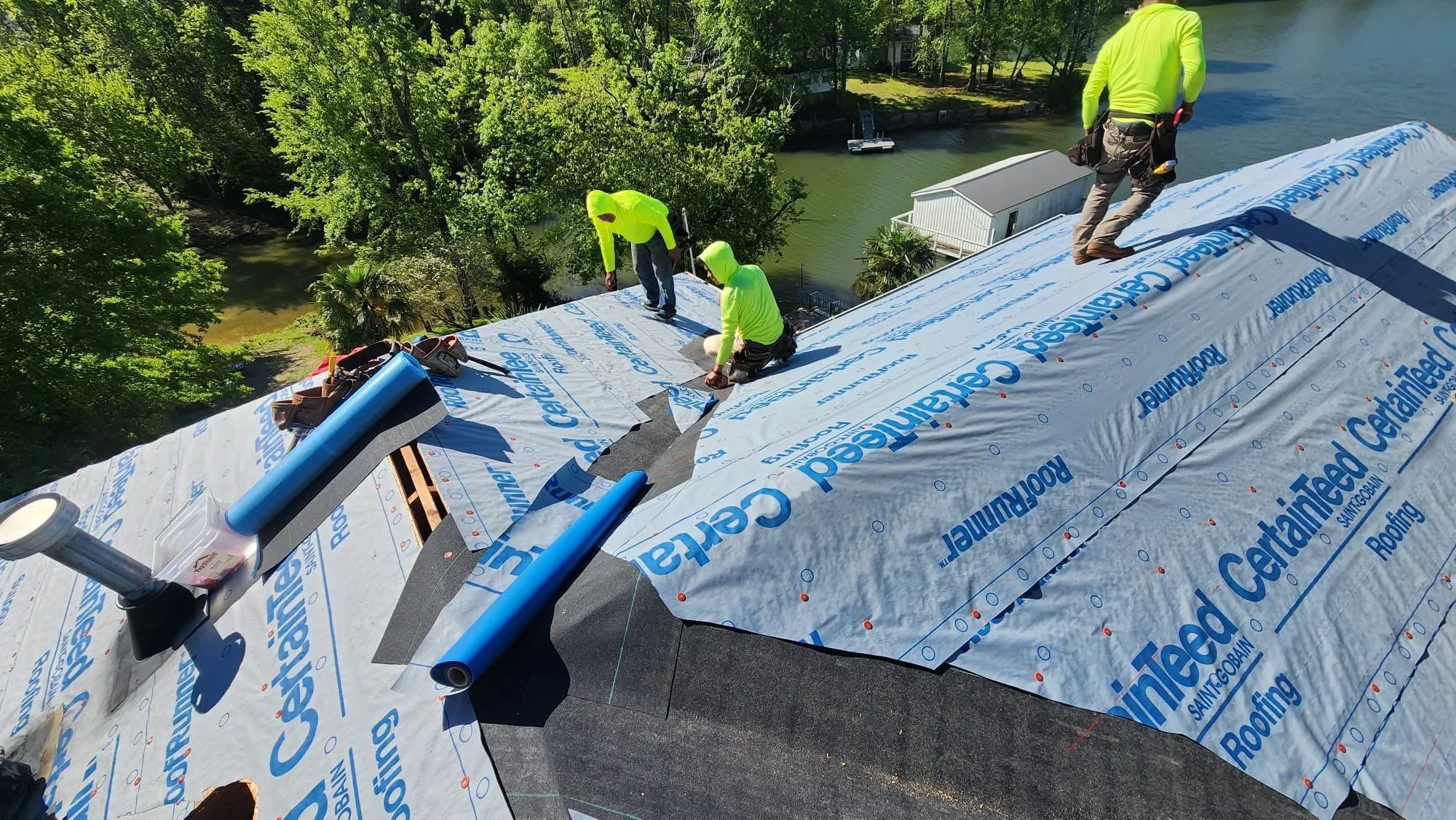
gallery

Work with our Team! We are GAF Master Elite and CertainTeed Select ShingleMaster contractors

WHAT OUR CUSTOMERS SAY ABOUT OUR SERVICES

frequently asked questions

Yes. We provide Exclusive Roof Inspections designed to give property owners a clear and honest evaluation of their roof’s condition. The inspection typically takes 45 to 60 minutes, allowing our professionals to thoroughly assess your property. Our representative will access your roof and attic, documenting findings with photos and/or video. We then provide professional recommendations immediately so you can make the right decision for your home.
We are a full-service roofing contractor specializing in roof repairs, roof replacements, new construction installations, storm damage restoration, commercial roofing systems, and gutter installation. Every project is treated as a complete roofing system to ensure long-term performance, not just a temporary fix.
Most inspections take approximately 45 to 60 minutes. Timing depends on the size, pitch, and complexity of the roof.
Common signs include water stains on ceilings, active leaks, lifted or missing shingles, granule loss, and widespread algae growth, which appears as greenish-black streaking visible to the naked eye. However, many issues are not visible from the ground, which is why an annual professional inspection is important for property owners.
Yes. Storm damage is one of our specialties. We identify wind, hail, and storm damage in accordance with insurance guidelines. Our professionals document everything properly and provide a clear path to restore your roof correctly, whether through the insurance claims process or out-of-pocket, with financing options available.
Yes. We guide you through the process by performing a detailed inspection, documenting damage, and working alongside your adjuster when needed. Our role is to ensure your roof is restored according to code and manufacturer requirements.
See More
Request An Exclusive Roof Inspection
Copyright 2026. Roofing Company | All rights reserved.
Designed by Branophia
crossmenuchevron-downarrow-uparrow-rightarrow-left-circlearrow-right-circle