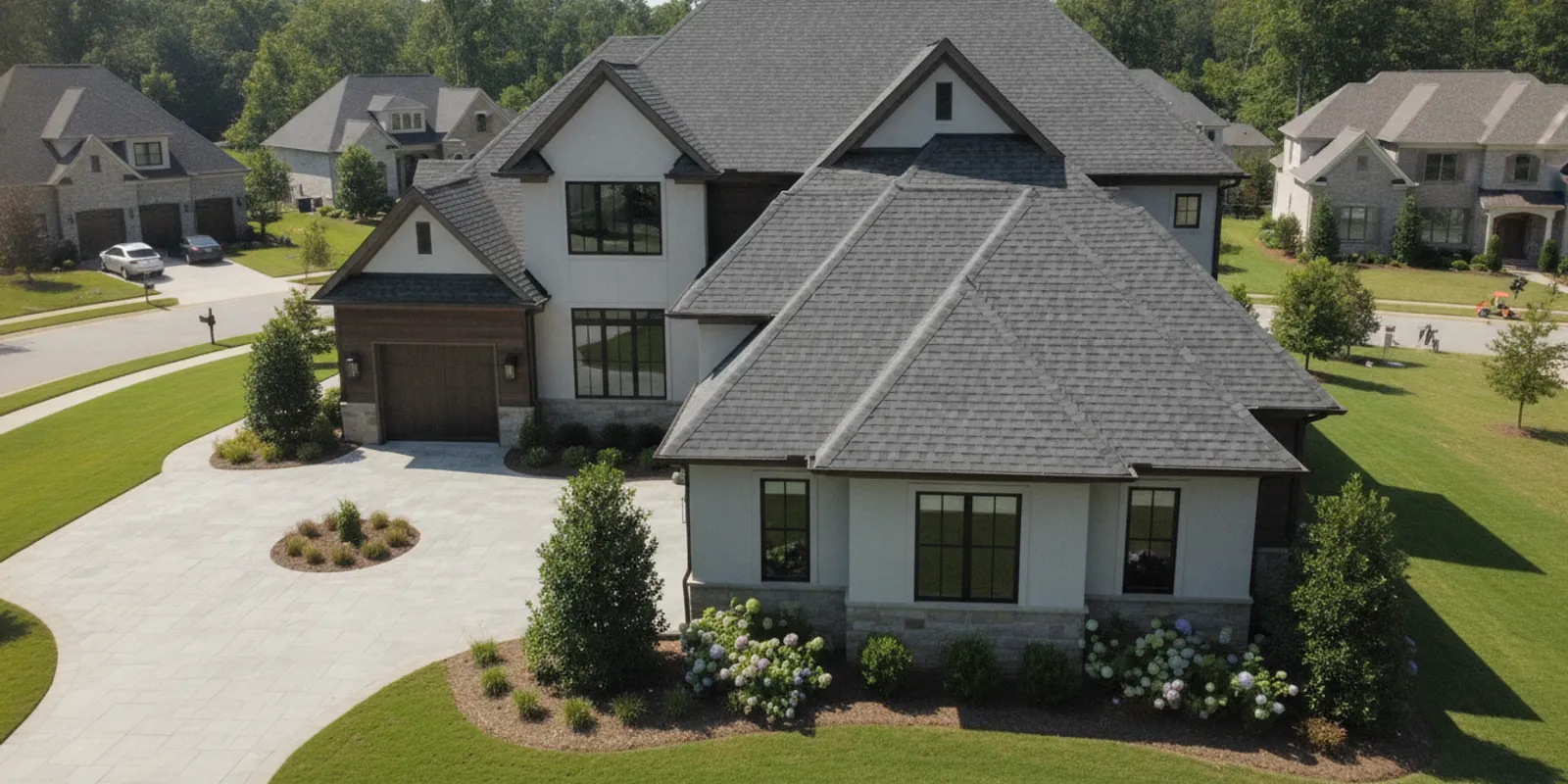
You cannot see underlayment from the driveway. It sits on the roof deck, under the shingles, and it only gets judged when the covering comes off or when water shows up somewhere it should not.
Roof underlayment replacement is usually part of a bigger decision, not its own project. The question is whether the layer under the shingles is still protecting the deck, and whether you are already opening the roof for another reason. If the shingles are staying, replacing the underlayment across the whole roof means taking those shingles off anyway.
Call Today to Book Your Exclusive Roof Evaluation
Shingles shed most of the water. Underlayment is the backup for what gets past them: wind-driven rain at a cut edge, a failed flashing, a lifted tab, ice at the eaves. It is fastened to the deck before the shingles go on. Felt, a synthetic sheet, and a self-adhered membrane at the eaves and valleys are the usual choices. Which one belongs on a roof depends on the shingle, the slope, and the manufacturer's instructions, not on a general rule.
If that layer is torn, missing, or installed so water runs under it instead of over it, the deck takes the water. New shingles on top of a failed sheet do not fix that.
Plan on new underlayment when the roof covering is coming off. That is a normal part of a replacement, not an add-on. It is also the right call in a repair when the crew opens one area and finds the sheet wet, rotten, or never lapped correctly.
It is the wrong call as a standalone project when the shingles are fine and there is no leak. There is no way to slide a new sheet under a finished roof. Anyone offering that is describing a different job than the one you will get.
These are reasons to book an evaluation, not proof that the underlayment has failed:
A musty upstairs closet can also be a bath fan venting into the attic. Do not approve a tear-off on a smell. Have someone look at the deck and the flashing before you agree to replace anything.
A repair fits when the failure is local. The crew removes shingles in that area, replaces torn or wet underlayment, replaces any soft decking, and ties the new shingles back into the field. Super Roofing repairs by opening the area to the deck. Laying a patch over the existing shingles is not the repair.
A full replacement, including new underlayment across the roof, fits when:
Ask for both prices when it is close. A local repair that leaves a 20-year-old field of brittle shingles around it may only buy a season. The roof replacement page is the right context if the evaluation lands on a full tear-off.
Compare the work, not the word "underlayment."
Two bids that both say "replace underlayment" can mean eight feet of a valley or the entire house. Get the square footage or the slopes in the document.
Storms here push water uphill under shingles, and shaded roofs stay wet longer. That is an argument for the right underlayment and for ice-and-water membrane where the manufacturer calls for it. It is not an argument that every Charlotte roof needs its underlayment replaced on a schedule.
If the roof is not leaking and the covering has life left, leave it alone and look at it once a year. If it is leaking, fix the path the water is taking. The roof inspection page covers what that look includes.
A local repair carries residential repair workmanship coverage of 1 year. A full system, with the underlayment and the shingles specified together, can carry 15-year, 30-year, or lifetime workmanship coverage depending on the system in the proposal. Those are Super Roofing's workmanship terms, not CertainTeed's.
CertainTeed SureStart PLUS is the manufacturer's warranty on an eligible shingle system. It is separate, and a PREMIER contractor is what makes the top tier available. It does not apply to a patch of underlayment with no eligible system around it. Read the warranty page, then read the warranty named on your proposal.
If you have a stain or a leak, note the room and take a photo from the attic if you can do it safely. Book an evaluation and ask whether they expect a local repair or a tear-off, and what they will do if the deck is soft. Approve the underlayment work only as part of that scope, not as a line item nobody can see.
Contact Super Roofing about a roof repair or replacement
Only in the area being repaired. The shingles there come off, the sheet is replaced, and new shingles go back. You cannot replace the underlayment across a roof and keep the old shingles.
Not by itself. The water may be entering at a flashing, a boot, or a valley and running along the deck. If you can reach the attic safely, look for a stain on the underside of the deck or wet insulation. Do not climb onto the roof. A qualified roofer inspects the roof surface and decides whether the repair is local or the covering has to come off.
Yes. Once the covering is off, the underlayment is part of the new assembly. A proposal that reuses the old sheet on a full replacement should explain why.
