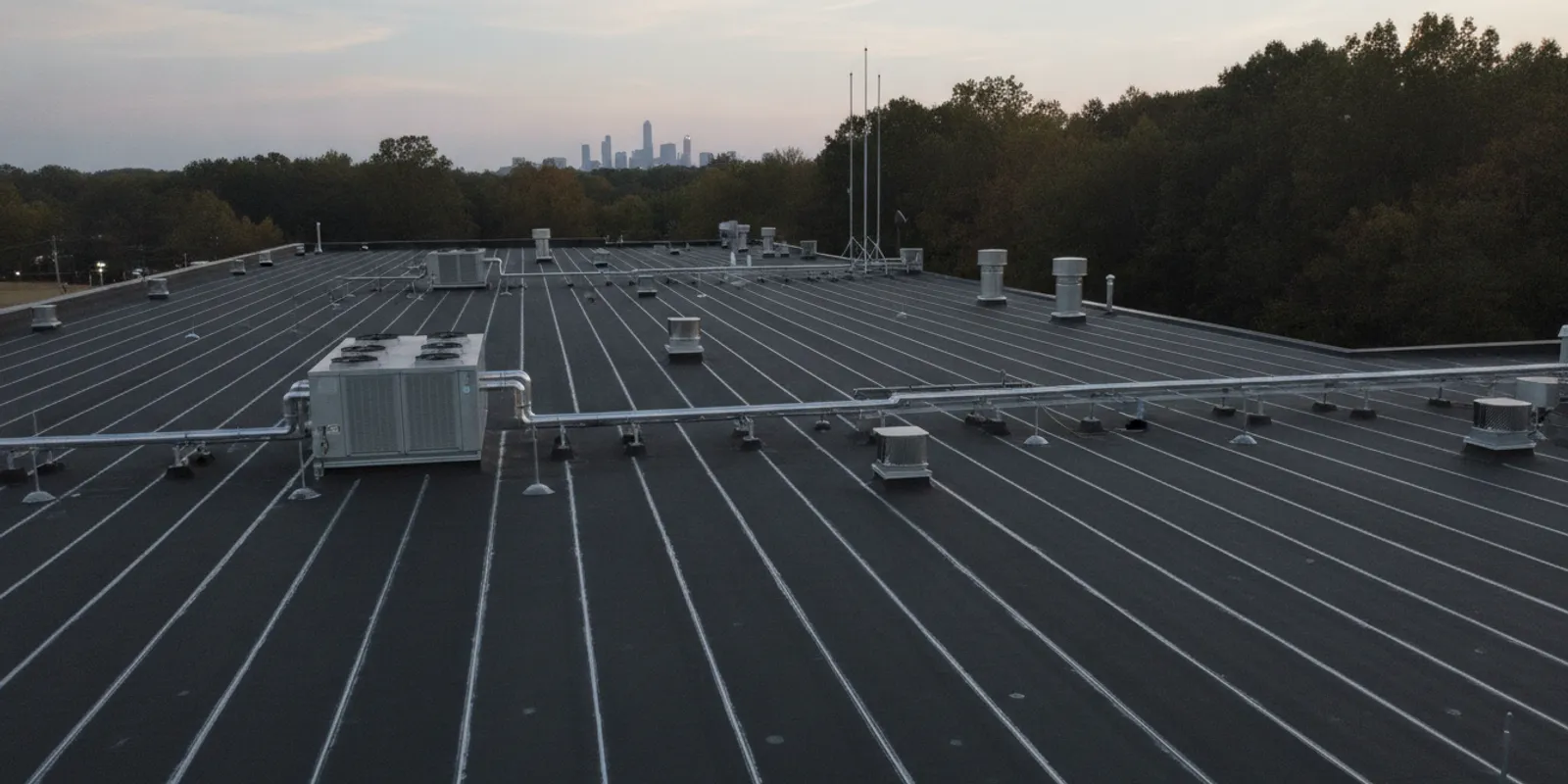
EPDM roof repair cost is not one figure for every Charlotte-area building. The scope depends on where water enters, how far it travels, whether insulation or decking is affected, and how the repair can be accessed. A ceiling stain is a clue, not a complete diagnosis. Before approving work, ask the contractor to connect the observations to a written scope and explain what remains uncertain.
Contact Super Roofing to discuss an Exclusive Roof Inspection
EPDM is a synthetic rubber membrane used on low-slope commercial roofs. The roof assembly includes more than the visible membrane. Seams, flashing, edges, penetrations, drains, insulation, deck, and connections to other materials can all matter to an investigation. A small visible opening can require careful access and diagnosis; a wider affected area can be straightforward to reach but require more materials and coordination.
The main cost drivers are the location and extent of the defect, condition of nearby roof details, concealed moisture or damaged materials, access and safety needs, drainage, building operations, and documentation. These factors interact. A leak near a mechanical unit may involve an equipment curb and recent service history. A leak near a wall may involve a transition. Neither location proves the cause on its own.
Ask the roofer to identify what was observed, where it was observed, and why that condition is believed to relate to the indoor symptom. The estimate should distinguish confirmed conditions from items that can only be checked after the affected roof section is opened. A total without this explanation is hard to compare with another proposal.
After water passes through a roof opening, it may travel along the deck, insulation, framing, or other building components before appearing inside. The stain's size and location are useful information, but they do not necessarily establish the roof defect or the full repair boundary. Note when the leak appears, the room and ceiling location, and whether it follows steady or wind-driven rain. If several rooms are affected, mark them on a simple floor plan.
Gather prior repair records, photos, roof plans, warranty documents, and dates of rooftop equipment work if available. A history can show whether the issue is recurring and what areas were previously investigated. Photograph interior evidence from a safe location. Do not climb onto a commercial roof or handle rooftop equipment; wet surfaces, edges, ladders, and electrical systems create hazards.
A cut, puncture, or other membrane condition should be assessed together with nearby materials and seams. Ask which roof area is included and whether adjacent details were reviewed. Super Roofing's repair approach is to address the root cause by stripping the affected area to the deck and rebuilding compromised layers. The written scope should state the work boundary and what would require separate approval.
Pipes, vents, curbs, rooftop supports, walls, and edges interrupt the roof surface. The number, condition, and accessibility of these details can affect diagnosis and work. A leak near HVAC equipment does not prove the equipment caused it. Share recent service dates and ask the assessor to identify the detail and evidence supporting the proposed work.
Blocked drains, damaged drain details, or persistent standing water may be relevant. Ask whether the estimate includes drainage work or only the membrane repair. Water can also affect insulation or decking. If hidden conditions cannot be confirmed before opening the area, ask how they will be photographed, described, and approved before work expands beyond the agreed scope.
A useful assessment relates interior symptoms to roof details, inspects the suspected area and surroundings, and separates observations from assumptions. Ask the contractor to identify the likely entry point, nearby seams or flashing reviewed, and any signs of broader deterioration. The scope should name roof zones and included details, and should describe what additional investigation may be needed if the source remains uncertain.
For commercial property, discuss tenant schedules, restricted access, escorts, work hours, sensitive areas, and equipment that must remain in service. Decide in advance who can approve changes if concealed damage is discovered. A facility manager may coordinate the work while an owner, board, or asset manager has approval authority. Agreeing on a decision path can reduce delay when new findings arise.
Super Roofing Company describes one-year residential and two-year commercial repair workmanship warranties. The proposal should state the applicable terms for the project and the work covered. Do not assume repair terms are the same as a manufacturer's system warranty or terms for a replacement.
A targeted repair may fit when the source is identifiable, the affected area is limited, and surrounding materials remain suitable for continued service. Broader repair, restoration planning, or replacement may merit consideration when leaks recur in multiple areas, details show widespread deterioration, or inspection finds extensive underlying damage. These are decision factors, not a diagnosis of any one roof.
Ask what evidence supports a narrow repair and what findings would make broader work more suitable. Separate immediate leak correction from longer-term planning. If a phased approach is proposed, clarify what it addresses now, what remains, and what uncertainty the owner accepts by deferring other work.
Super Roofing Company services EPDM roofs and its company information says EPDM is serviced, not installed new. The commercial roofing service page provides an overview of its commercial capabilities, but a site-specific assessment should determine the work for a particular building.
Online figures may describe new installation rather than repair, and may omit labor, access, investigation, concealed damage, and occupied-site coordination. Do not turn a general per-area installation amount into a repair budget by multiplying it by a roof measurement. Check what a source measures and whether it applies to commercial repair in this region.
An EPDM industry resource discusses climate, maintenance, and reroofing strategy, including cases where an aged system may be restored rather than removed. That general information is not a promise for a particular roof; inspection findings and assembly conditions determine what is suitable. Read the EPDM climate, maintenance, and reroofing resource.
Use one row per roof zone and compare each proposal's diagnosis, included details, materials, access assumptions, exclusions, change process, documentation, and warranty. Mark missing information as a question. If one total is higher, check whether it covers a wider area or additional layers. If another proposal is narrower, ask what could happen if concealed conditions are found later. Request written clarification rather than comparing unexplained totals.
For a recurring leak, compare earlier invoices and photos with the new findings. Ask whether the current proposal addresses the same location or a different source. For several leaks after one storm, ask whether the assessor will review each location and distinguish related conditions from separate ones. For one active leak on an aging roof, request separate descriptions for immediate repair and broader condition planning. In each case, the scope should link work to observed evidence.
A consistent log can help the next assessor understand what was checked and whether a symptom returned after work. It does not replace inspection, but it reduces reliance on memory and helps property teams share information when managers change.
Prepare a brief leak history, safe indoor photos, prior work records, and access requirements. Ask for an assessment that identifies the suspected source, distinguishes confirmed conditions from unknowns, and provides a written scope with clear boundaries and change approvals. Super Roofing Company's commercial roof repair information is a relevant overview, not a substitute for a building-specific inspection.
Review options for an Exclusive Roof Inspection
EPDM roof repair cost is easier to evaluate when the proposed work is tied to documented conditions and the estimate states what remains uncertain. A careful assessment gives Charlotte-area property owners a practical basis for comparing options and planning the next step.
