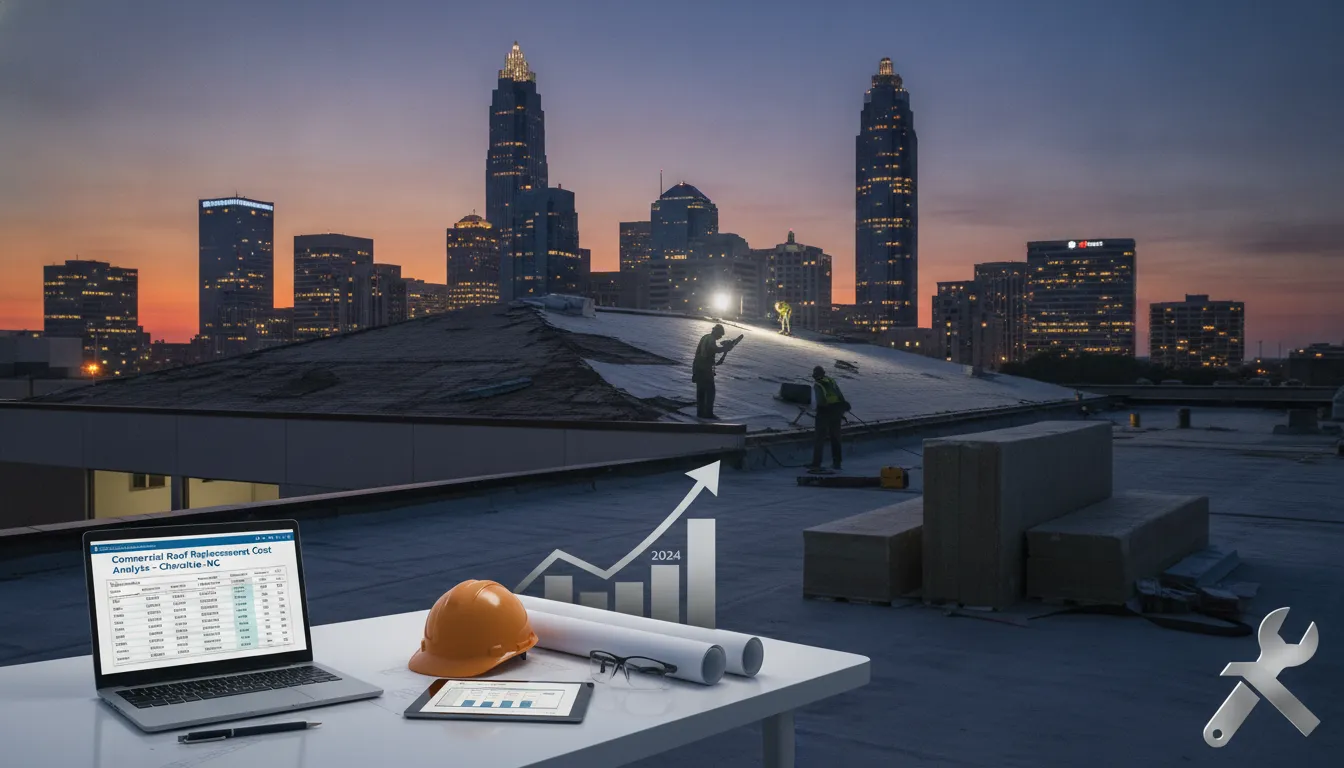
A recurring leak can raise an important question: should you repair the roof again or replace it? The answer depends on the roof’s overall condition, the extent of moisture or material damage, and the cost of continued repairs. A leak in one area may call for a targeted fix, while widespread deterioration can point to a larger problem. For commercial property owners in Charlotte and nearby communities, the right decision starts with a thorough inspection, not a guess based on visible damage alone. This guide explains how commercial roof replacement cost compares with repair expenses and which details can help you choose a practical next step.
Commercial roof replacement costs depend on the roofing system, roof size, access, and the condition of the existing assembly. Published estimates offer a starting point, but they are not Charlotte-specific quotes. For properties in Charlotte and nearby communities such as Fort Mill, the best way to set a realistic budget is to compare a preliminary cost range with the findings from an on-site inspection.
Commercial roof replacement estimates commonly range from $5.50 to $18 per square foot installed. Standard systems often cost about $10 to $15 per square foot, while premium materials or complex projects may reach $18 to $25 per square foot. These ranges provide a budgeting reference, not a guaranteed price for your building. Commercial roofing cost factors include the roofing system, labor, removal of existing materials, and the work required beneath the roof.
For example, a 10,000-square-foot roof at $10 to $15 per square foot would come to roughly $100,000 to $150,000. At the broader $5.50 to $18 range, the estimate would be $55,000 to $180,000. Your final quote may differ if the project requires deck repairs, insulation upgrades, difficult access, or additional tear-off and disposal work.
Roofing contractors may list roof size in square feet or roofing squares. One square equals 100 square feet, so a 10,000-square-foot roof measures 100 squares. This conversion makes estimates easier to review, but a building’s footprint does not always equal its roof area. Overhangs, additions, sloped sections, and irregular layouts can change the measurement.
Ask each contractor to state the measured roof area in the estimate and confirm which sections are included. For a low-slope roof, the area may be close to the building footprint, but use a professional measurement when planning your budget. That helps you compare proposals based on the same scope rather than on different assumptions about roof size.
A contractor needs to inspect the roof to assess the membrane, flashing, drainage, insulation, and deck condition. The inspection can also help determine whether targeted repairs are appropriate or whether widespread deterioration calls for replacement. A qualified roofing assessment can help prevent unnecessary work and identify issues that may affect the budget.
Request a written estimate that specifies the roofing system, measured area, tear-off and disposal, planned repairs, and any assumptions about hidden damage. Ask what could change the quoted price once work begins. General commercial roof repair and replacement cost guidance can help you understand typical ranges, but an on-site evaluation is essential for pricing your specific property.
Commercial roofing estimates depend on more than the membrane or panel you choose. Roof size, existing layers, insulation, access, and installation details can all affect the total. The ranges below are general per-square-foot benchmarks, not a quote for a specific property in Charlotte, Fort Mill, or elsewhere in the Carolinas. Use them to compare options, then ask a qualified contractor to assess your building in person.
TPO typically costs about $6 to $10 per square foot. This single-ply membrane has a reflective surface that can help limit heat absorption, a consideration for commercial buildings in Charlotte’s warm summers. PVC is usually priced higher than TPO, with cost depending on the product and the roof’s design. Both systems need properly installed seams, flashing, and details around rooftop equipment to help protect against leaks.
When comparing bids, check that each contractor has specified the membrane thickness, attachment method, insulation, and warranty. A commercial roofing cost breakdown offers useful context for typical material ranges, but your building’s condition and project scope will determine the actual price.
EPDM generally costs about $5.50 to $8.50 per square foot. This flexible rubber membrane is a common option for low-slope roofs, where it can accommodate temperature changes. Its cost may make it worth considering for owners comparing several roofing systems, but the installed price also depends on insulation, attachment method, roof access, and the work needed around seams and penetrations.
EPDM is often black, so ask your contractor how the membrane’s color and proposed insulation may affect roof temperatures and energy use. Request a complete estimate that includes edge details, flashing, and drainage components, not just the membrane. Also ask what routine inspections and maintenance the system will need, so you can account for care after installation.
Metal roofing typically costs $10 to $18 or more per square foot, making it a higher-upfront-cost option than many membrane systems. Its potential service life of 40 to 60 years may offer long-term value when the system is suitable for the building and properly installed and maintained. Metal is often considered for sloped roof areas, though the right choice depends on the structure, design, and drainage requirements.
Review the full scope of each proposal. Ask whether the price includes underlayment, flashing, fasteners, and any structural work required to support the panels. It’s also useful to compare the expected service life and maintenance needs with the initial installation cost. A lower starting price may not be the best fit if the system does not suit your building’s needs.
Built-up roofing, or BUR, generally ranges from $8 to $14 per square foot. Modified bitumen typically costs about $7 to $11 per square foot. Both are layered systems that contractors may recommend for certain low-slope commercial roofs. The final price can vary with the number of layers, surface finish, insulation, existing roof condition, and installation requirements.
Ask how the proposed system will be detailed around drains, walls, and rooftop equipment. These areas need careful installation to help prevent water intrusion. Make sure the estimate explains what happens to existing roofing layers and whether repairs to the roof deck are included. You can use this commercial roof cost guide as a reference when reviewing typical ranges, while keeping in mind that an on-site assessment is needed for a project-specific quote.
To compare materials fairly, look at the complete installed system rather than the price per square foot alone. Check whether each estimate includes tear-off, insulation, flashing, drainage work, rooftop details, labor, and disposal. Ask contractors to state the expected service life, maintenance needs, energy-related features, and warranty terms for the proposed system.
Reflective surfaces may be worth discussing for buildings exposed to strong sun, but performance depends on the roofing assembly and building design. A contractor can explain whether a material suits your roof’s slope, structure, drainage, and use. Request an in-person inspection before setting your budget, since general price ranges cannot account for hidden damage or site-specific installation needs.
A commercial roof replacement quote depends on more than the roofing material. Contractors assess the roof’s size and condition, access to the site, installation details, and the work needed to protect the building during construction. That’s why two properties with similar square footage can receive very different estimates. In Charlotte, a building’s location, occupancy, and project schedule can also shape the scope. Published cost ranges offer a rough starting point, but an in-person inspection is the best way to understand what your roof needs and what a quote includes. A commercial roofing cost guide explains why project-specific conditions matter.
Roof area affects how much material a project requires and how long installation takes. Contractors measure the roof itself, which may differ from the building’s footprint. Slope and layout also play a part: multiple levels, irregular sections, and steep areas can require additional labor, safety measures, and equipment.
Consider how crews and materials will reach the roof, too. A site with limited staging space or restricted vehicle access may need lifts, cranes, or extra coordination. In busy areas such as South End or SouthPark, planning deliveries and work zones can be especially important. Ask whether the estimate reflects these access conditions and any equipment costs. A cost breakdown for commercial roofing outlines how roof and site characteristics can affect pricing.
The condition of the existing roof can change the project scope. Contractors check how many roofing layers are in place and whether they need to remove them before installing the new system. Tear-off adds labor and disposal costs, but it also allows the crew to inspect the materials underneath.
Insulation and the roof deck need attention as well. Wet insulation or deteriorated decking may need repairs or replacement before the new roof goes on. These issues aren’t always visible during an exterior review, so an in-person inspection is important for a reliable estimate. Ask how the quote handles repairs that become apparent after tear-off, and whether the contractor will get your approval before doing additional work. A site assessment helps clarify the likely scope and identify conditions that could affect the final cost.
A roof replacement involves details around drains, edges, walls, skylights, vents, and other openings. These areas need properly installed flashing and materials compatible with the roofing system. Roofs with many transitions or penetrations often require more detailed labor than a simple, unobstructed surface.
Drainage also deserves careful review. Ponding water can point to clogged drains, poor slope, or another issue that should be addressed during the project. Rooftop HVAC units, pipes, and electrical equipment may need protection or coordination with other trades while crews work nearby. Check that the quote clearly states whether flashing, drainage work, equipment protection, tear-off, and disposal are included. These items can form part of the installation scope, as described in this commercial roof cost overview. If a proposal lists only the roofing material, ask what else the price covers.
Labor and material availability affect both project pricing and scheduling. The roofing system, roof complexity, and crew availability can influence how long installation takes. For an occupied property, the contractor may need to phase the work, coordinate with tenants, or schedule deliveries around business operations. Discuss these needs early so the estimate reflects the plan for minimizing disruption.
Permits and inspections may also apply, depending on the property’s location and project scope. Ask the contractor to identify the relevant jurisdiction and clarify whether permit fees and inspections are included. Published cost figures vary by system and complexity. Highland Roofing’s cost considerations notes that standard systems may cost $10 to $15 per square foot, while premium or complex systems can cost more. Treat broad ranges as a planning reference, then rely on an itemized quote based on your building.
The roof itself is only part of a commercial replacement budget. Before approving a proposal, ask what the price includes, what could change after work begins, and how additional expenses will be approved. An itemized estimate makes it easier to compare contractors and plan for your Charlotte property.
Confirm whether the estimate includes removing the existing roof, hauling away debris, and protecting your property during construction. Some proposals bundle tear-off and disposal into the installed price; others list them separately. Ask how the crew will protect entrances, landscaping, parking areas, and rooftop equipment, particularly if your building remains open during the project.
Permits and inspections may also add costs or affect the schedule. Requirements depend on the project and jurisdiction, so ask your contractor which approvals apply and whether fees are included. Windward Roofing’s commercial cost breakdown lists tear-off and disposal among common project expenses. Your estimate should spell out these items, along with who is responsible for arranging permits and inspections.
After crews remove the old roofing, they may uncover damaged decking or wet insulation that wasn’t visible during the initial inspection. Ask how the contractor will document these conditions, price the repairs, and get your approval before proceeding. This helps prevent surprises and gives you a clear record of changes to the original scope.
You may also want to consider insulation improvements, drainage corrections, or updated flashing around roof penetrations. If rooftop HVAC units or other equipment need to be moved, find out whether cranes, lifts, and specialized labor are included. These costs depend on the building’s layout and access. Puetz Construction’s guide to commercial roof replacement costs highlights why property owners should review estimates for items that may not appear in the initial quote.
Roofing work can affect entrances, loading areas, parking, and daily operations. Discuss the schedule with your contractor before work begins, including noisy tasks, deliveries, and areas that need to stay clear. If your property has tenants, customers, or employees on-site, ask whether crews can complete the work in phases to limit disruption.
Set aside funds for damage uncovered during installation, such as deteriorated decking or moisture beneath the membrane. Agree on how the contractor will document unexpected conditions and provide a revised cost before completing extra work. When weighing repair against replacement, consider the cost of recurring repairs as well as the replacement price. Highland Roof’s repair-versus-replacement overview explains why an assessment of the full roof condition can help guide that decision.
Even a detailed estimate may change if the crew finds concealed damage. Set aside a contingency reserve based on the roof’s age, condition, and project scope. Ask your contractor to explain how unexpected costs will be documented and approved, so you can make informed decisions without delaying necessary work.
Review warranty requirements before selecting materials or approving substitutions. Coverage may depend on approved components, installation methods, drainage details, or ongoing maintenance. Ask what the material and workmanship warranties cover, what could affect coverage, and whether inspections or maintenance records are required. Keep the contract, product details, inspection reports, and service records together. A professional assessment can also help determine whether targeted repairs are appropriate before you commit to a full replacement, as Constitution Contracting explains in its guide to common roofing misconceptions.
A leak or damaged area doesn’t automatically mean a commercial roof needs replacing. The decision depends on the damage, the roof’s overall condition, and the likely cost of future repairs. An on-site inspection can help determine whether a targeted fix will hold or whether replacement makes better long-term sense.
A leak near a flashing or roof penetration may be fixable. But damage across large sections, leaks that return after repairs, or problems appearing in multiple areas can point to a system-wide issue. Water can travel beneath a roofing membrane, so the spot where it shows up inside may not reveal the full extent of the damage.
Ask your contractor to document affected areas and explain whether the problems share a common cause. Depending on the roof’s condition, restoration may be an option alongside repairs or replacement. A qualified roofer can help assess the best approach, as explained in this guide to commercial roofing myths.
Age matters, but it shouldn’t determine the decision by itself. The roofing system, installation quality, maintenance history, and exposure to Charlotte’s rain and heat all affect how well a roof holds up. Signs of trouble can include open seams, brittle or deteriorating materials, persistent ponding water, and damaged flashing.
Moisture beneath the membrane can affect insulation and the roof deck, even when the surface damage looks limited. Ask the contractor to check for wet insulation and assess the deck during the inspection. Replacing only the visible section may leave hidden moisture or failing materials in place, leading to more work later.
If repair bills keep coming, compare their total with the cost of replacement. Consider completed repairs, likely follow-up work, and potential damage to equipment, inventory, or business operations from continued leaks. Replacement calls for a larger upfront budget, while repeated repairs may add up without addressing the underlying problem.
One commercial roofing cost guide suggests considering replacement when damage affects about 25% to 30% of the roof. Treat that range as a reference, not a universal rule. The right choice depends on the roof system, damage, and repair scope. Ask your contractor to explain the costs and expected service life of each option.
A surface check can reveal obvious issues, but it may not show the full scope of work. A replacement quote can depend on roof size, existing layers, insulation, deck condition, drainage, access, and rooftop equipment. Hidden moisture or damaged decking may only become clear during a closer assessment.
Request an on-site inspection and a written estimate that details the recommended work, materials, and assumptions. Ask what could change the price once work begins and how additional repairs will be approved. A property-specific assessment, as Windward Roofing explains, helps account for the factors that shape a commercial roof replacement quote.
A roofing estimate should spell out the recommended work, materials, costs, and possible extra charges. Compare proposals line by line rather than choosing based on the total alone. For Charlotte-area properties, an on-site inspection can help confirm what your roof needs and account for its access, drainage, and existing condition.
Make sure each proposal covers the same roofing system and scope of work. A quote for TPO, for example, is not directly comparable to one for modified bitumen or metal. Ask contractors to identify the product, membrane thickness or system details, insulation, attachment method, and included flashing or drainage work.
Check that bids also cover the same roof area and installation approach. Differences in tear-off, insulation, or roof-deck repairs can affect the price. As a general reference, commercial roof replacement cost estimates range from about $5.50 to $18 per square foot installed, depending on the system and project. These figures are not a Charlotte-specific quote. An on-site inspection can help you compare proposals for the work your building actually needs.
Review exclusions as closely as you review the work description. Ask whether the price includes removing and disposing of the old roof, permits, inspections, site protection, and cleanup. Find out how the contractor will price concealed damage, such as wet insulation or a deteriorated deck, if it appears after tear-off. Ask how extra work will be documented and approved before it begins.
Confirm the expected start and completion dates, how weather delays will be handled, and whether the project could affect employees, tenants, or customers. Review the deposit, payment schedule, and conditions for progress payments. A commercial roof replacement cost guide explains how expenses omitted from an initial estimate can affect the final budget. Have each contractor list exclusions and potential additional charges in writing before you sign.
Ask whether the contractor has experience with your roof type and similar commercial properties. Request references from recent projects, and, if possible, ask property owners or managers about communication, cleanup, timing, and how unexpected conditions were handled. This can give you a better sense of the working relationship than a proposal alone.
Verify that the contractor holds the licenses required for the project and location, and request current proof of general liability and workers’ compensation insurance. Confirm that coverage will remain active during the work. This matters on commercial properties where roofing activity may affect employees, tenants, customers, or neighboring buildings. A low bid may reflect differences in materials, labor, or coverage. Use these commercial roofing contractor considerations to assess a proposal beyond its total.
Request copies of both the manufacturer’s warranty and the contractor’s workmanship warranty. A manufacturer’s warranty typically covers specified product defects, while a workmanship warranty addresses installation-related issues. Coverage varies, so check the length of each warranty, exclusions, maintenance requirements, and how to submit a claim.
Ask whether the proposed system must be installed by an approved contractor to qualify for the manufacturer’s warranty. Clarify who you should contact if a problem arises. A longer warranty is not necessarily more useful if it excludes common issues or includes conditions that are difficult to meet. Compare warranty terms alongside the contractor’s experience, materials, and installation plan. Roofing bid guidance recommends considering reputation, warranties, and material quality, rather than choosing on price alone.
A lower upfront bid may cost more over time if the roof needs frequent repairs or has higher maintenance requirements. Compare the proposed systems for expected durability, energy performance, upkeep, and likely repair costs. For a commercial property in Charlotte, a reflective roof may be worth discussing, but the right option depends on the building and the system’s suitability.
Ask whether targeted repairs could extend the existing roof’s useful life, particularly if the damage is limited and the underlying materials are sound. If leaks recur or deterioration is widespread, replacement may be the more practical option. Request a clear explanation of the advantages, costs, and limitations of each recommendation. This roof repair and replacement guidance can help inform the conversation, but an inspection is needed to assess your specific roof.
Even a detailed estimate may not account for every condition hidden beneath an existing roof. Set aside contingency funds for approved, unexpected work, such as roof-deck repairs, wet insulation, or drainage corrections. Ask contractors what concealed issues they may find and how they will document added work before proceeding. Agreeing on an approval process in advance can help you manage changes to the budget.
After installation, follow the maintenance requirements for your roofing system and warranty. Schedule regular inspections, ideally twice a year and after significant storms, and keep records of inspections and repairs. Check that flashing remains secure, drains stay clear, and the membrane shows no signs of damage. Regular roof inspection and maintenance can help identify small issues before they require more extensive repairs.
How much should I budget for a commercial roof replacement in Charlotte?
Use published per-square-foot ranges as an early planning tool, not as a local quote. The cost for your property depends on its measured roof area, the roofing system, access, and any repairs needed beneath the existing roof. An on-site inspection is the best way to get a project-specific estimate.
What details should a commercial roofing estimate include?
Look for the roof area, roofing materials and system specifications, tear-off and disposal, insulation, flashing, drainage work, labor, and cleanup. The estimate should also explain exclusions and describe how the contractor will document and price concealed damage.
Why can two contractors quote different prices for the same building?
Proposals may use different materials, installation methods, or assumptions about tear-off and repairs. They may also differ in how they account for access, equipment, warranties, and site protection. Ask each contractor to price the same scope so you can compare the bids fairly.
How do I know whether to repair or replace my commercial roof?
A roofer should assess the extent of damage, the condition of the materials beneath the surface, and the history of leaks and repairs. If problems are limited, a repair may be suitable. If deterioration is widespread or repairs keep recurring, compare the long-term cost of continued work with replacement.
What should I do if the contractor finds damage after removing the old roof?
Ask the contractor to photograph and describe the issue, provide a written cost for the additional work, and get your approval before proceeding. Agree on this process before the project starts, and keep records of approved changes alongside your contract.