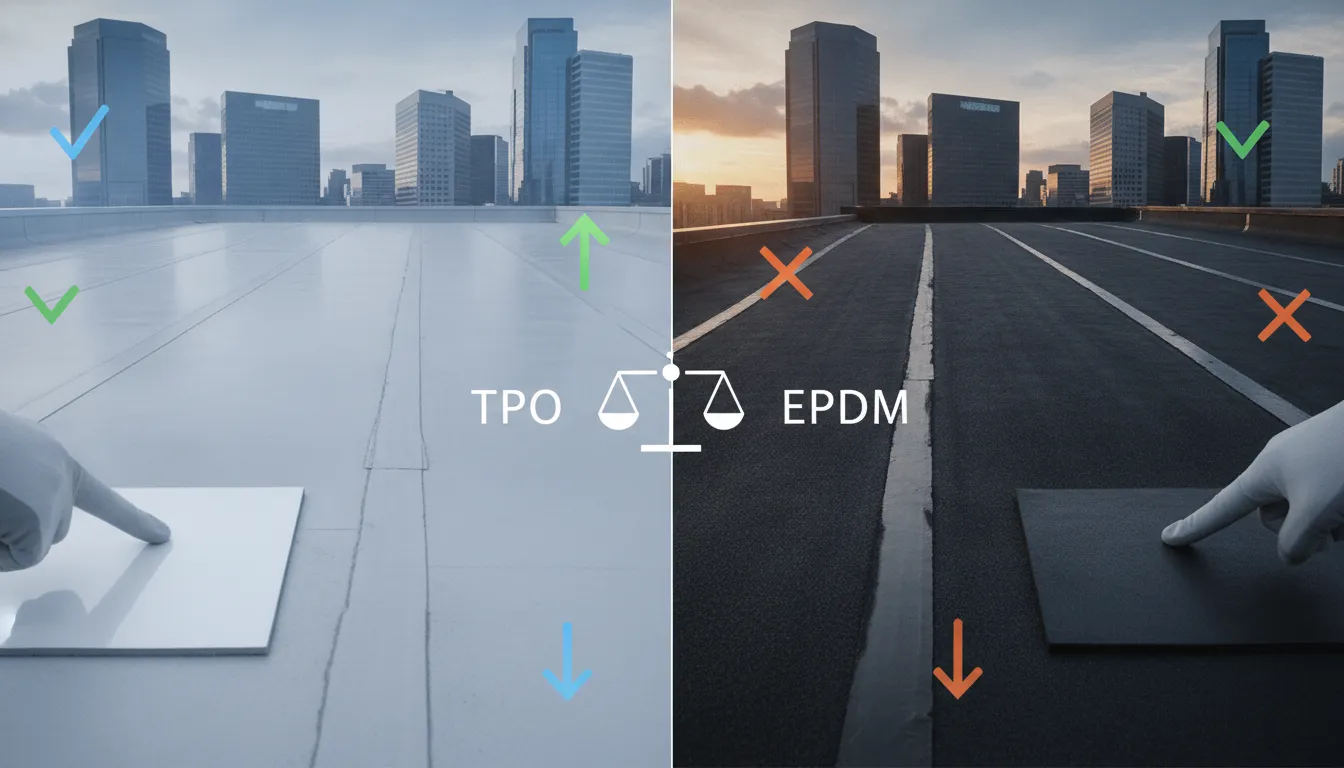
A leak over an office, retail space, or warehouse can disrupt daily operations and put building contents at risk. Choosing the right low-slope roofing system is one way to help protect your investment. When weighing TPO roofing vs EPDM for commercial buildings, it helps to look beyond the material names. TPO typically has heat-welded seams and reflective color options, while EPDM is a flexible rubber membrane with seams commonly joined using tape or adhesive. Both systems can work well when matched to the building and installed properly. Here’s what property owners in Charlotte and Fort Mill should know about cost, heat, repairs, maintenance, and roof design before deciding.
TPO and EPDM are single-ply membranes used on many low-slope commercial roofs. Both protect the roof assembly from the elements, but they differ in material, seam construction, and common membrane color. Those differences can affect installation, repairs, and how the roof handles heat.
The membrane is only one part of the system. Insulation, attachment method, drainage, rooftop equipment, and installation quality also influence performance. For a commercial property in Charlotte, it’s worth considering how these factors work together before choosing a material.
TPO, or thermoplastic polyolefin, is a flexible roofing membrane commonly available in white and other reflective colors. Installers join its sheets with hot-air welding, which fuses the material along the seams. When properly prepared and welded, those seams form a continuous bond designed to help keep water out. The quality of the result depends on skilled installation and careful inspection.
TPO is a popular option for commercial buildings because it combines a single-ply design with reflective color choices. A white membrane can reflect more sunlight than a dark surface, which may help reduce roof heat gain. The TPO system overview explains why its cost, reflectivity, and performance have made it a common commercial roofing choice.
TPO products vary by manufacturer and specification. Compare membrane thickness, warranty terms, and installation details, and ask how the contractor will verify the seams.
EPDM stands for ethylene propylene diene monomer. This synthetic rubber roofing material is known for flexibility and weather resistance. It is commonly black, though lighter-colored versions are also available. Unlike TPO, EPDM seams are typically joined with seam tape or adhesive rather than heat-welded. Installers must also carefully detail edges, penetrations, and transitions to protect against water intrusion.
EPDM’s flexibility can help it accommodate movement as temperatures change, but the system still depends on proper installation and regular care. Product thickness, seam materials, and attachment method can vary. EPDM roofing guidance outlines common installation approaches for this membrane.
Ask your contractor which EPDM product and seam system they recommend for your building. It’s also useful to understand how they will inspect the finished roof and address repairs.
Insulation helps control heat transfer between a building and the roof, while the attachment method secures the roofing assembly to the deck. TPO and EPDM can be fully adhered, mechanically attached, or ballasted with gravel or pavers, depending on project requirements. The right method depends on the roof structure, design, and other site conditions. Roofing attachment options should be selected for the specific building rather than treated as interchangeable.
Roof slope, drains, seams, and rooftop equipment also affect how water moves and where installers need to pay close attention. Membrane color influences heat absorption: white TPO reflects more sunlight, while standard black EPDM absorbs more. In Charlotte, a reflective surface may be worth considering when cooling demand is a priority. However, energy performance also depends on insulation, building use, and the complete roof assembly. Comparisons of TPO and EPDM can help explain how color may affect heating and cooling needs.
TPO and EPDM are both single-ply roofing systems used on commercial buildings, but they differ in membrane color, seam construction, and how they respond to heat and rooftop wear. Neither is the right choice for every property. The best fit depends on the roof’s size and layout, insulation, drainage, equipment, and how often people need to access the roof.
For buildings in Charlotte and nearby communities, it also helps to consider hot, sunny summers, heavy rain, and seasonal temperature changes. A light-colored membrane may reduce heat absorption, while sound seams, flashing, and drainage help manage water. An experienced commercial roofer can assess the existing roof and explain how each system would perform on your building.
Compare more than the initial installation price. Product specifications, workmanship, maintenance, energy use, and warranty requirements all affect the roof’s cost over its service life. Ask contractors to explain those factors in their proposals, rather than relying on a general claim that one membrane is always cheaper or lasts longer. A site-specific assessment can help you weigh the trade-offs before choosing a system.
TPO and EPDM can have similar upfront costs, but the installed price depends on membrane thickness, insulation, attachment method, roof access, and whether old materials need to be removed. Repair costs depend on the damage: fixing an isolated puncture may be simple, while widespread seam problems or wet insulation can call for more extensive work.
When comparing proposals, look beyond the starting price. Consider expected service life, inspection and maintenance needs, repair costs, and potential energy use. Some professionals view EPDM’s possible longevity as an advantage over the long term, but actual results depend on the product, installation, and upkeep. Use a detailed roof assessment to compare options for your building, and review the cost and life-cycle trade-offs before making a decision.
Neither TPO nor EPDM has one guaranteed service life. Performance depends on the membrane’s specifications, installation quality, rooftop conditions, and maintenance. EPDM is flexible and can provide decades of service when the right product is installed correctly and maintained. TPO can also perform for many years, but formulations and product quality vary, so compare specifications rather than relying on the membrane name alone.
Installation details matter for both systems. Seams, flashing, drains, and roof penetrations must be properly prepared and completed to limit leak risks. Ask your contractor which product and thickness they recommend, how the crew will follow manufacturer instructions, and what inspections are needed to maintain warranty coverage. Learn how installation and maintenance affect membrane performance.
Most TPO membranes are white or light-colored, allowing them to reflect more sunlight than traditional black EPDM. That can reduce heat transfer through the roof and may help limit air-conditioning demand during Charlotte’s warm months. The effect on energy bills varies with insulation, HVAC performance, roof area, shade, and how the building is used.
Black EPDM absorbs more solar heat, which may be useful when added warmth is welcome, but can increase heat gain in warmer weather. Light-colored EPDM is also available, so compare the specific products under consideration rather than assuming every TPO roof is reflective and every EPDM roof is dark. Ask your contractor to consider membrane color alongside insulation and energy goals. This comparison of TPO and EPDM heat performance can help frame that discussion.
TPO sheets are joined with heat-welded seams. When properly installed, the weld creates a continuous bond between sheets. EPDM seams are generally joined with adhesive or seam tape, and the surfaces must be prepared carefully for a reliable connection. Either system can develop leaks if seams or flashing are poorly detailed, damaged, or left unchecked.
Consider how often technicians access HVAC units and other rooftop equipment. Tools, dropped parts, and repeated foot traffic can damage either membrane. TPO is often considered more resistant to punctures and impact, but it is not damage-proof; EPDM also needs protection in high-traffic areas. Ask whether walk pads or designated service paths make sense for your roof. You can compare seam construction and puncture resistance as part of that assessment.
TPO and EPDM can be mechanically attached or adhered, with the right method depending on the roof deck, insulation, building use, wind requirements, and project conditions. Some roofs may qualify for installation over an existing layer, while others require tear-off. Your contractor should explain what the roof inspection and applicable codes allow, along with how the work may affect building access and daily operations.
Skilled installation is essential, especially around seams, drains, parapet walls, and rooftop equipment. Before work starts, ask how the crew will check seam quality and document the completed roof. Read the warranty carefully: confirm required inspections, approved repair methods, and maintenance responsibilities. These details can affect coverage if a problem arises later. For an overview of installation considerations for TPO and EPDM, consult the manufacturer guidance for the specific system proposed.
TPO and EPDM are both single-ply roofing options for commercial buildings, but they differ in how they handle sunlight, temperature changes, seams, and repairs. Neither membrane is automatically the right choice for every property. Roof layout, insulation, drainage, rooftop equipment, and installation quality all affect performance.
For building owners in Charlotte, Fort Mill, and nearby communities, the choice often comes down to the roof’s specific needs and how the building is used. Consider the advantages and trade-offs below when comparing systems with a commercial roofing contractor.
Many TPO membranes are available in light colors that reflect sunlight. On a roof exposed to Charlotte’s summer heat, a reflective surface may help limit heat absorption and reduce cooling demand. The actual effect depends on the full roof assembly, including insulation and ventilation, as well as how the building is used.
TPO seams are joined with hot air. When properly installed, the weld forms a strong bond between membrane sheets. TPO is also flexible and resistant to UV exposure, water, punctures, and impacts, making it a practical option for many commercial roofs. A contractor can explain how the membrane’s color, thickness, and attachment method fit your property. American WeatherStar’s comparison of TPO and EPDM outlines factors that can affect each system’s performance.
TPO quality can vary among manufacturers and products, so comparing only the membrane type or lowest bid can leave out important details. Ask for the product specifications, membrane thickness, warranty terms, and installation requirements. A roofing contractor should explain how the proposed product suits your roof and expected service conditions.
The seams also require skilled installation. Contractors use hot-air welding, and the result depends on proper equipment, technique, and site conditions. Weak welds can create vulnerable spots, particularly around roof edges, penetrations, and HVAC equipment. The TPO and EPDM overview from David Maines describes the skill involved in welding TPO seams. Before work begins, ask how the crew will test seams and document the installation.
EPDM is a flexible rubber membrane that can handle changes in temperature, making it a consideration for roofs exposed to seasonal weather shifts. Its repair methods are well established, and a contractor may be able to patch localized damage instead of replacing a larger area. The right repair depends on the roof’s age, condition, and the type of damage.
With quality materials, proper installation, and routine maintenance, EPDM can provide a long service life. American WeatherStar’s membrane comparison notes that a well-installed and maintained EPDM roof may last 40 years or more, though results vary by property and upkeep. EPDM is also recyclable, which may be a consideration when weighing material and repair options for a commercial building.
Traditional black EPDM absorbs more sunlight than a light-colored membrane. For a Charlotte building with significant air-conditioning needs, this may be a factor in the decision. White EPDM products may be available, but compare their specifications and roof assembly rather than assuming all EPDM systems have the same thermal performance.
EPDM seams commonly use tape or adhesive, so careful surface preparation and detailing are essential. Seams, flashings, edges, and areas around pipes or rooftop equipment should be installed correctly and checked during inspections. EPDM can also be more vulnerable to punctures than some TPO products, particularly on roofs with regular foot traffic. Ask your contractor about walk pads, access routes, and repair procedures to help protect the membrane.
Neither TPO nor EPDM is maintenance-free. Both need periodic inspections and timely repairs, with close attention to seams, flashings, drains, penetrations, and rooftop equipment. Debris and standing water can affect either system, so the inspection schedule should reflect the roof’s design and how often staff or contractors access it.
The lowest initial price does not always mean the best long-term value. Compare the complete roofing system, including insulation, attachment method, membrane specifications, labor, warranty requirements, and likely repair needs. In some cases, an existing roof may be suitable for restoration instead of full replacement. American WeatherStar’s comparison notes that both TPO and EPDM can serve as a base for fluid-applied restoration. A professional roof assessment can help determine whether that approach fits your building.
Charlotte’s hot summers, strong sun, heavy rain, and seasonal temperature changes all affect commercial roofs. TPO and EPDM can both perform well here, but the right fit depends on the building, roof design, and quality of installation.
Charlotte’s summer sun can heat a large, exposed roof for hours at a time. White TPO reflects more sunlight than black EPDM, which absorbs more solar heat. EPDM’s flexibility can help it accommodate movement as temperatures change, but both membranes need careful installation and sound flashing to handle seasonal conditions.
Humidity makes it especially important to keep water out around seams, drains, and roof penetrations. Ask a contractor to assess these details and explain how the proposed system will handle the building’s heating and cooling needs. Roof construction and warranty requirements also matter, as American WeatherStar’s TPO and EPDM comparison notes.
Heavy rain makes drainage a priority on Charlotte’s low-slope commercial roofs. Water should flow toward drains and scuppers instead of collecting in low spots. Standing water can put prolonged stress on seams and flashing, making existing weaknesses more likely to cause leaks. Before choosing a membrane, have the roof assessed for slope, drain placement, and areas where water tends to collect.
Wind and storms can loosen roof edges, damage flashing, or scatter debris across the surface. TPO’s heat-welded seams and EPDM’s taped or adhered seams both rely on proper installation. After severe weather, check for punctures, displaced flashing, and blocked drains. RoofVista’s guide to flat-roof failures explains why ponding water can expose weaknesses in seams and other roof details.
Membrane color affects how much sunlight a roof absorbs. White TPO reflects sunlight and may help limit heat transfer into a building, making it worth considering for large roofs with substantial sun exposure and high cooling demand. Black EPDM absorbs more heat, which may be less appealing during Charlotte’s hot summers. Still, membrane color alone does not determine energy use: insulation, HVAC efficiency, building operations, and shade all play a role.
Compare potential energy savings with the system’s cost, warranty, and repair needs. A reflective roof may suit one building but offer less benefit to a shaded property or a building with different energy priorities. Premier Group Roofs discusses TPO’s reflective surface, but an assessment of your building can help clarify whether reflectivity should guide your choice.
Roof layout influences how well either membrane performs. A slight slope with clear drainage paths can help move rainwater off the roof, while low spots and crowded drains may increase ponding. Shade from nearby buildings can reduce direct sun exposure. HVAC units, vents, and service paths need well-detailed flashing and protection from regular foot traffic.
Local code requirements, manufacturer specifications, and warranty terms can also shape the approved roof assembly. The right system may depend on the building structure, insulation, attachment method, and wind requirements. Ask your contractor to confirm that the proposed installation meets applicable Charlotte-area requirements and to explain how it will address drains, penetrations, and equipment curbs.
Protecting a commercial roof starts with regular inspections and careful maintenance, not just responding to leaks. TPO and EPDM systems both need attention to seams, flashings, drains, penetrations, and rooftop equipment. These areas are exposed to weather, movement, and foot traffic, and small defects can allow water to reach insulation or other parts of the roof assembly.
For buildings in Charlotte, Fort Mill, and nearby communities, a maintenance plan should account for heavy rain, seasonal temperature changes, and severe storms. Schedule professional inspections, keep drainage paths clear, and arrange an assessment after significant weather. If you notice water stains inside the building, standing water on the roof, or visible membrane damage, contact a qualified roofer rather than attempting a repair yourself.
Keep inspection reports, photographs, repair invoices, and warranty documents together. A clear record helps your contractor track changes over time and confirm whether maintenance or repairs meet the manufacturer’s requirements. Because TPO and EPDM use different materials and seam methods, have repairs performed by someone familiar with your specific system. Consistent care can help identify developing problems early and preserve the roof’s performance.
TPO and EPDM require different methods for joining and repairing seams. TPO seams are heat-welded, while EPDM seams typically rely on tape or adhesive. Roof layout, attachment method, drainage, and rooftop equipment also affect how the membrane and its details should be installed.
Ask prospective contractors about their experience with your roof system and building type. Request a clear explanation of how they will address seams, penetrations, flashing, and transitions. Installation quality is important: Elevate’s overview of TPO and EPDM notes that poor installation can contribute to seam separation and leaks. Before work begins, confirm who will review the completed details and whether the installation follows the manufacturer’s requirements.
Arrange professional inspections at least twice a year, often in spring and fall. Ask the inspector to examine membrane seams, flashing along roof edges and walls, penetrations for pipes and vents, drains, and areas around HVAC units or other rooftop equipment. These details can experience movement, weather exposure, and foot traffic, making them important places to check for wear.
Keep a written record of inspection dates, photos, and recommended work. Routine inspections can help identify concerns before they lead to interior damage, and the records may be useful if you need to discuss warranty coverage. American WeatherStar recommends regular maintenance for both TPO and EPDM roofs. If an inspector finds an issue, ask whether it needs immediate repair or should be monitored.
Leaves, branches, and other debris can block drains and scuppers, slowing water runoff. Have debris removed carefully so the membrane is not damaged, and make sure drainage paths remain clear. After rainfall, note areas where water remains for an extended period. Persistent ponding may point to a drainage or slope concern that a roofing professional should assess.
Schedule an inspection after severe weather, particularly if the roof was exposed to heavy rain, high winds, or flying debris. Avoid walking on the roof unless you are qualified to do so, since foot traffic can damage the membrane and create safety risks. A preventive maintenance plan can help preserve roof performance by addressing drainage issues and other developing concerns before they contribute to leaks.
A puncture or separated seam may appear minor, but water can travel beneath the membrane and affect insulation or other roof components. Contact a qualified roofing contractor if you notice visible damage, loose flashing, open seams, or signs of moisture inside the building. A professional can determine whether a localized repair is appropriate or whether the surrounding area needs further inspection.
Repairs should use methods and materials approved for the roof system. TPO and EPDM have different properties, so a patch or sealant that suits one membrane may not work for the other. Ask the contractor to document the affected area, repairs completed, and any recommended follow-up. Timely repairs and ongoing maintenance support roof longevity, whichever system you have, as Premier Group Roofs explains.
Keep your roof warranty, installation records, inspection reports, and repair invoices in an accessible place. Warranty terms may specify inspection schedules, approved repair materials, or who can perform covered work. Before authorizing repairs, review those requirements with your roofing contractor. Using an unapproved product or missing a required maintenance step could affect warranty coverage.
Ask the contractor to explain the care instructions for your specific TPO or EPDM system. Requirements can vary by manufacturer, product, and installation details. Record inspection dates, photographs, and completed work in a maintenance log, and contact the contractor or manufacturer if a requirement is unclear. Moser Roofing Solutions notes that both TPO and EPDM are used on commercial roofs, but the right maintenance approach depends on the system installed.
Choose a commercial roofing system based on the building’s needs, not a blanket claim that one membrane is always better. In Charlotte, heat, humidity, strong sun, and heavy rain can all affect roof performance, but the roof’s design and condition matter just as much. A low-slope roof with rooftop equipment, for example, may need a different plan for foot traffic, drainage, and repairs than a clear, open roof.
Compare specific products and installation plans before making a decision. Membrane thickness, insulation, attachment method, seams, flashing details, and warranty requirements all contribute to how the finished system performs. Consider the building’s use, current roof condition, energy priorities, and expected maintenance needs. A qualified commercial roofer can assess these factors and explain whether repair, restoration, or replacement is the right next step.
Look beyond the initial installation quote. Compare each product’s specifications, including membrane thickness, and review the warranty’s coverage, duration, exclusions, and inspection requirements. Ask whether coverage depends on a specific installation method, approved materials, or documented maintenance.
Then consider the full cost of owning the roof: installation, routine maintenance, repairs, and potential energy use. A lower upfront price may not offer the best long-term value if the system is a poor fit for your building or its warranty requirements are difficult to meet. Ask contractors to explain what is included in their estimates so you can compare proposals fairly. This TPO and EPDM comparison offers a useful overview, but product-specific specifications and warranty documents should guide your final decision.
Think about how the roof is built and how people use it. Frequent access for HVAC maintenance, multiple penetrations, and complex roof edges can influence the attachment method, seam layout, and repair plan. Insulation, roof slope, drainage, and existing rooftop equipment also affect how a membrane will perform.
Energy priorities matter, too. A reflective TPO membrane may be worth considering if reducing heat absorption is a goal, while EPDM may suit other building requirements. Neither membrane guarantees a particular energy outcome. Results depend on the full roof assembly, building use, and local conditions. Discuss how climate and building requirements influence membrane selection with a contractor familiar with commercial roofs in the Charlotte area.
Ask contractors to explain their installation and quality-check process in detail. For TPO, find out how the crew will prepare and heat-weld seams, verify welds, and detail roof edges and penetrations. For EPDM, ask how seams will be prepared and taped or adhered, and how transitions will be sealed.
Clarify how the contractor will inspect the completed roof and handle future repairs to punctures, seams, or flashing. Request a written scope that lists the materials, installation methods, inspection steps, and warranty responsibilities. These details make it easier to compare bids and understand what the work includes. With either membrane, skilled installation is essential. A contractor should be able to explain how seam detailing and workmanship help protect the roof from leaks and premature problems.
Before choosing a membrane, have a qualified commercial roofer assess the existing roof. The evaluation should cover the membrane, insulation, drainage, flashing, penetrations, rooftop equipment, and any signs of trapped moisture or recurring leaks. It can also help determine whether a repair, restoration, or full replacement is appropriate.
Tell the contractor how the building is used, whether you expect equipment changes, and what matters most for energy performance and maintenance. That context helps shape a recommendation around the property rather than a generic product preference. A detailed commercial roof assessment can help you compare TPO and EPDM alongside the installation and maintenance plan each system requires.
Is TPO or EPDM better for a commercial roof in Charlotte?
Neither is the best choice for every building. TPO may suit properties where limiting heat absorption is a priority, while EPDM may fit buildings with different performance or maintenance needs. A roofer should assess your roof’s drainage, insulation, equipment, and condition before recommending a system.
Can TPO or EPDM be installed over an existing roof?
Sometimes, but it depends on the existing roof’s condition, moisture levels, structure, and applicable code and warranty requirements. An inspection can determine whether an overlay is suitable or whether the old roofing needs to be removed.
How often should a commercial TPO or EPDM roof be inspected?
Plan for professional inspections at least twice a year, and consider another after severe weather. Inspections should include seams, flashing, drains, roof penetrations, and areas around HVAC equipment.
Which membrane costs less to install or repair?
Costs vary with the roof’s size and layout, product specifications, insulation, attachment method, and project access. Repair costs depend on the location and extent of damage. Ask contractors for itemized proposals so you can compare the full scope, warranty, and expected maintenance needs.
Should I repair my existing roof or replace it with TPO or EPDM?
That depends on the roof’s age, condition, and whether moisture has affected the insulation or deck. A professional assessment can clarify whether a targeted repair, restoration, or full replacement makes sense for your building.
