If your home in Charlotte, Fort Mill, Waxhaw, Ballantyne, or Lake Norman has roof damage, you may be asking:
These are common questions — and the answers require clarity and professionalism.
Let’s break them down carefully.
Insurance adjusters evaluate claims based on:
The biggest mistake homeowners make is speculating.
Avoid statements like:
Why? Because homeowners insurance typically covers sudden and accidental damage, not ongoing deterioration or maintenance neglect.
According to the Insurance Information Institute (III), homeowners policies cover damage caused by specific perils such as wind or hail, but not wear and tear or lack of maintenance.
When speaking with an adjuster:
Clear, accurate information protects you.
This depends on:
The 2021 International Residential Code (IRC) allows a second layer of asphalt shingles in many cases, but prohibits additional layers beyond two and restricts reroofing over certain conditions (such as when the existing roof is water-soaked or deteriorated).
If your roof already has two layers:
Insurance carriers generally pay to restore the property to pre-loss condition, subject to policy terms and applicable code requirements.
If local code requires tear-off of multiple layers, that requirement may affect the scope of work.
Understanding local code compliance is essential before assuming coverage outcomes.
Many homeowners request leftover shingles after installation.
There is no universal legal requirement that a roofer must leave extra materials unless specified in contract.
However, it is common industry practice to leave:
Why this matters:
The National Roofing Contractors Association (NRCA) emphasizes proper material documentation and system identification for future repair compatibility.
If you want extra shingles left behind, it should be written into your contract before installation.
There is no verified, publicly available national database ranking insurance companies by “most roof claim denials.”
Claim denial rates vary by:
The National Association of Insurance Commissioners (NAIC) tracks complaint ratios, not denial percentages for specific roof claims.
Public complaint ratios can be reviewed through the NAIC Consumer Information Source, but this does not equate to roof claim denial rankings.
Rather than asking which carrier denies the most claims, the better question is:
Insurance outcomes are policy-driven, not rumor-driven.
When roof damage may involve insurance, your contractor plays a documentation role — not a negotiation role.
A qualified roofing contractor:
According to the NRCA, proper inspection and documentation are essential when assessing storm damage.
A contractor does not replace your adjuster.
They ensure the roof condition is clearly presented and that approved work complies with building code and manufacturer requirements.
Choosing the right contractor ensures:
If your home experienced hail in the Charlotte metro area:
Avoid assumptions. Avoid speculation. Stick to facts.
Insurance claims are contractual processes governed by policy language.
Understanding your coverage — and working with qualified professionals — protects your financial position.
Avoid speculation about prior damage or roof age. Insurance covers sudden, accidental loss — not ongoing deterioration.
It may, if damage is covered and the roof complies with policy and code requirements. However, replacement may require tear-off to meet current code.
There is no universal requirement, but many contractors leave a small amount for future repairs if requested in the contract.
There is no publicly verified ranking of roof claim denials. Claim outcomes depend on policy language, documentation, and cause of loss.
Roof insurance claims require:
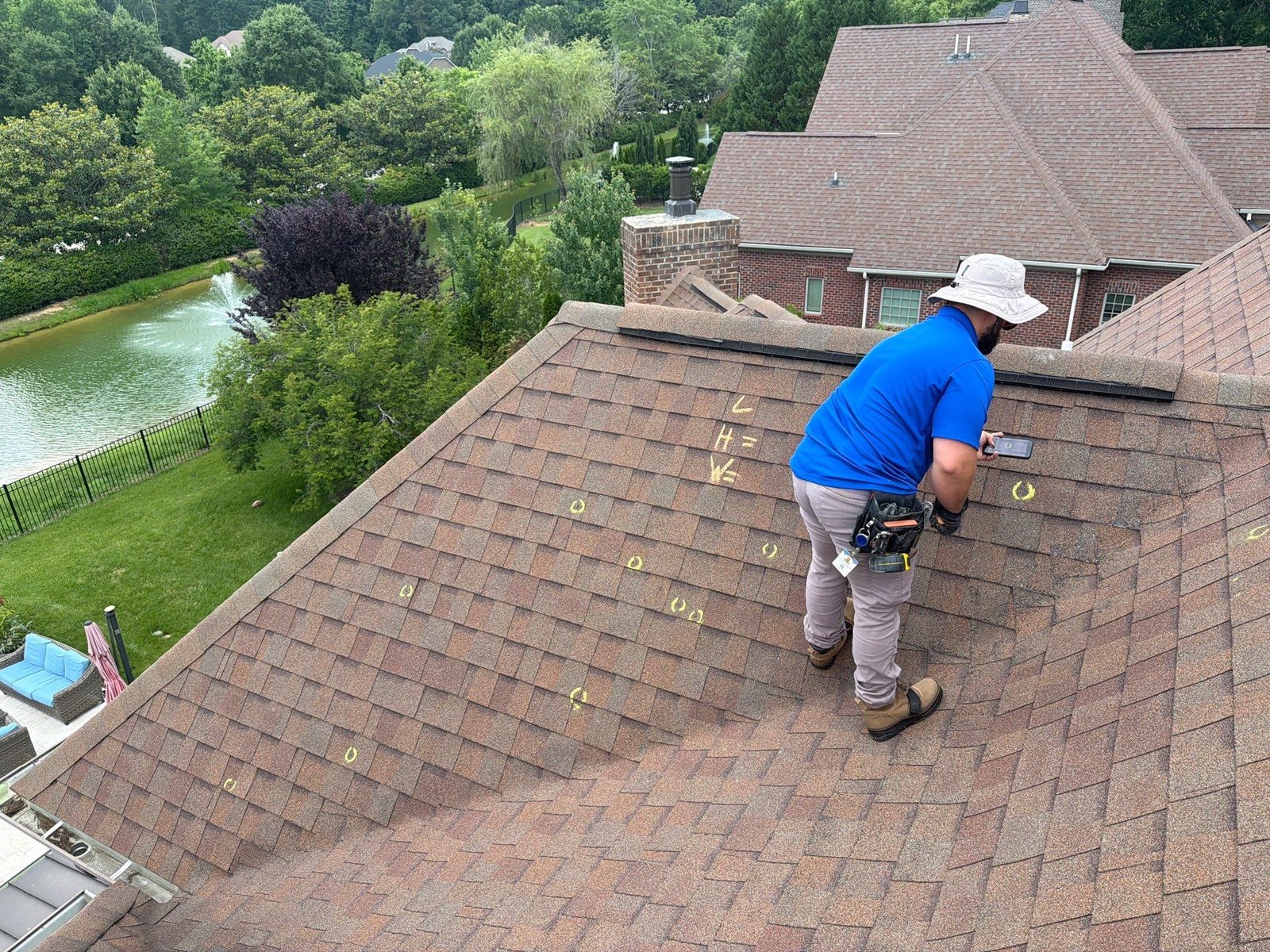
If your home in Charlotte, Fort Mill, Waxhaw, Ballantyne, or Lake Norman experienced roof damage, the most responsible first step is a professional Exclusive Roof Inspection.
Clear evaluation protects you before any insurance conversation begins.
Super Roofing Company
Serving Charlotte, Fort Mill, Waxhaw, Indian Land, Rock Hill, Ballantyne, SouthPark, Myers Park, Weddington, Marvin, Matthews, Cornelius, Mooresville, Denver, Tega Cay, and Lake Norman.
Insurance Information Institute (III). (n.d.). What does homeowners insurance cover? Retrieved March 27, 2026, from
https://www.iii.org/article/what-does-homeowners-insurance-cover
National Association of Insurance Commissioners (NAIC). (n.d.). Understanding homeowners insurance claims.Retrieved March 27, 2026, from
https://content.naic.org/consumer/homeowners-insurance.htm
National Association of Insurance Commissioners (NAIC). (n.d.). Consumer insurance complaint ratios. Retrieved March 27, 2026, from
https://content.naic.org/cis_consumer_information.htm
National Roofing Contractors Association (NRCA). (n.d.). Roof inspection and documentation guidance. Retrieved March 27, 2026, from
https://www.nrca.net
International Code Council (ICC). (2021). International Residential Code (IRC), Section R908 — Reroofing. Retrieved March 27, 2026, from
https://codes.iccsafe.org/content/IRC2021P2